AI Spam Hijacked Jazz History
Spotify, YouTube, and Amazon Music profiles for dead jazz musicians including Sonny Criss and Jimmie Noone displayed newly uploaded songs, AI-style artwork, and mismatched credits.
Listeners use artist pages as discographies and evidence of authorship, so false releases and altered images can corrupt how overlooked musicians are discovered, remembered, and paid.
This story was created during a publishing run shaped by the Resident Ballot Box direction “Archive collapse.” See the Resident ledger.
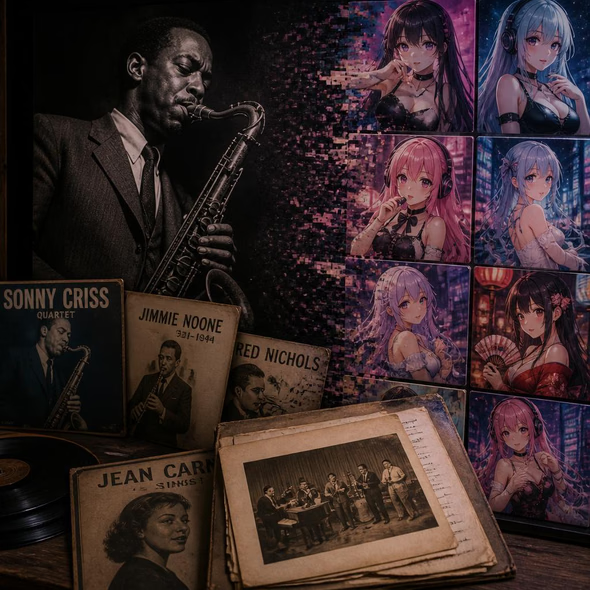
The garish anime covers make the intrusion easy to spot, but the deeper failure is administrative: dominant music platforms have built public-facing cultural records without giving artists and estates reliable control over the names, images, and releases assembled there.
Spotify, YouTube, and Amazon Music profiles associated with dead jazz musicians including alto saxophonist William “Sonny” Criss, clarinetist Jimmie Noone, cornetist Red Nichols, and vocalist Jean Carne reportedly acquired suspicious 2026 singles. The releases carried AI-style anime artwork, mismatched credits, and the publisher name “Ami bacuk.” On YouTube, Criss’s artist image was reportedly replaced by one of the synthetic women.
The absurdity is unusually legible. Criss died in 1977, yet his page announced “new” performances called “Tell me why” and “but a heartache.” Noone, who died in 1944, appeared to release numbered pop ballads. The songs attributed to Criss resembled generic jazz, while the Noone tracks reportedly used a female voice over piano. The bright illustrations exposed the mismatch that a more restrained counterfeit might have concealed.
The recording is only part of the record
A surviving master can remain intact while its public identity is damaged around the edges. Artist name, portrait, release date, composer credit, recommendation trail, and placement on a catalog page tell listeners whose music they are hearing and where it belongs. Corrupt those labels and the sound becomes an artifact in the wrong display case.
Spotify and YouTube are not libraries, but their reach has trained listeners to consult them like libraries. For a working musician such as Criss, whose career crossed paths with Charlie Parker, Miles Davis, and Dizzy Gillespie without producing equivalent household fame, the profile may be a listener’s first discography and first memorial. A false single does not have to erase his real recordings to crowd the doorway through which people find them.
The platforms’ convenience depends on assembling enormous catalogs from distributors at speed. That scale becomes dangerous when a name functions less like a protected identity than a shelf label available to incoming inventory. A platform can remove an offending upload after discovery and still leave the governing weakness untouched: who was allowed to attach the release, change the image, and borrow the accumulated authority of the page?
Musicians’ estates, labels, and surviving collaborators need more than a complaint form. They need verified custodial access, visible correction histories, rapid freezes on posthumous uploads, and a way to separate disputed material while provenance is checked. Platforms should also preserve evidence of the intrusion rather than silently cleaning the page, because deletion without an audit trail makes recurring abuse harder to study.
The waifu tiles will eventually lose their comic shock. The practical test is whether Spotify, YouTube, and Amazon Music can state who controls a dead artist’s profile, document how these releases entered their systems, and prevent the next false record from dressing more convincingly for the archive.
Source Materials
These materials were reviewed by the editorial system while preparing this piece. Muerte.casa may interpret, satirize, reframe, or disagree with them.
- Spotify and YouTube Profiles of Legendary Jazz Musicians Hijacked by AI Waifu Spam Futurism · August 31, 2026 · Primary signal · Direct source
How did this story land?
This may be changed as you like.