The Party Prescription Has a Dosage Problem
The BBC reported that some young adults are taking prescription anxiety medication instead of alcohol to feel intoxicated at parties, while experts dispute the trend's meaning and warn of risks.
Medication-based intoxication can conceal impaired judgment behind the appearance of medical control, leaving friends and clinicians with fewer visible measures of use.
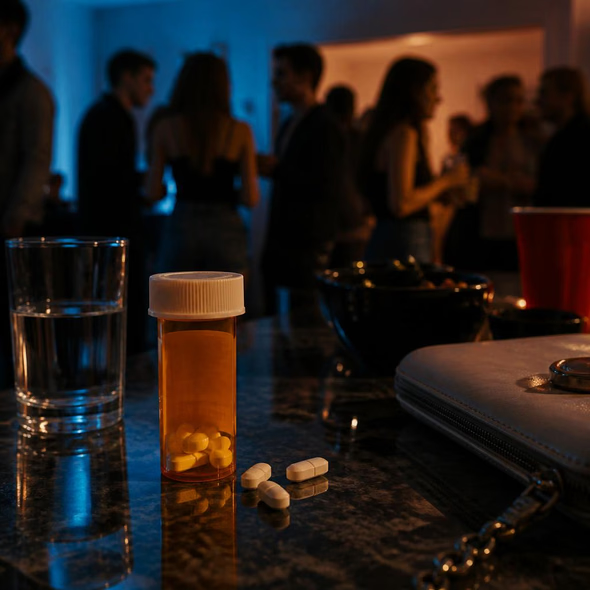
The prescription bottle carries the prestige of precision into a room organized around losing control. That social code can make intoxication look calibrated even when the relevant facts—dose, intended use, other substances and individual response—remain obscure.
Some young adults are taking prescription anxiety medication instead of alcohol to feel intoxicated at parties, according to the BBC. The report says experts disagree about how to interpret the behavior, but warn that using medication this way carries risks. The setting is social; the object doing the work came from a medical system.
The appeal is not difficult to read. Alcohol now arrives with calories, hangovers, expense and a familiar trail of glasses across the table. A pharmacy bottle suggests measurement, cleanliness and professional control. It can make a chemically altered evening resemble a wellness decision with better packaging.
That appearance changes the room. Friends often estimate alcohol use through visible units: the poured drink, the empty can, the return to the bar. Tablets provide a quieter count, and the prescription label can make scrutiny feel impolite. Controlled self-presentation does not guarantee controlled impairment.
Medical precision, social guesswork
A prescription is precise only within the instructions and clinical purpose attached to it. Once medication becomes a party tool, the bottle may remain official while the use no longer follows the context that made it intelligible. The social ritual borrows medicine's authority without bringing the prescriber into the room.
Clinicians therefore need room to ask how medication is actually being used, not merely whether a patient still has it. Partygoers face more immediate questions: Was the drug prescribed to the person taking it? Is the use consistent with its directions? Are alcohol or other substances involved? Who is watching for trouble, and how is everyone getting home? Those questions are less glamorous than pharmaceutical precision and more useful.
The next task is to establish the scale and shape of the behavior. Researchers and clinicians need to know whether medication is replacing alcohol, being combined with it, or appearing only in a narrow social scene; they also need better information about frequency and motivation. Until then, neither moral panic nor wellness branding should fill the evidence gap.
Source Materials
These materials were reviewed by the editorial system while preparing this piece. Muerte.casa may interpret, satirize, reframe, or disagree with them.
- Young adults are taking prescription drugs instead of alcohol - and it's dividing experts BBC · August 17, 2026 · Primary signal · Direct source
How did this story land?
This may be changed as you like.