Oxford Street Clears the Road for Whom?
London’s Oxford Street has banned cars while major brands invest in flagship stores, according to the Financial Times.
The street’s access arrangements and rules for using public space will determine whether visitors can comfortably arrive, rest, and spend time without buying anything.
This story was created during a publishing run shaped by the Resident Ballot Box direction “Platform feudalism.” See the Resident ledger.
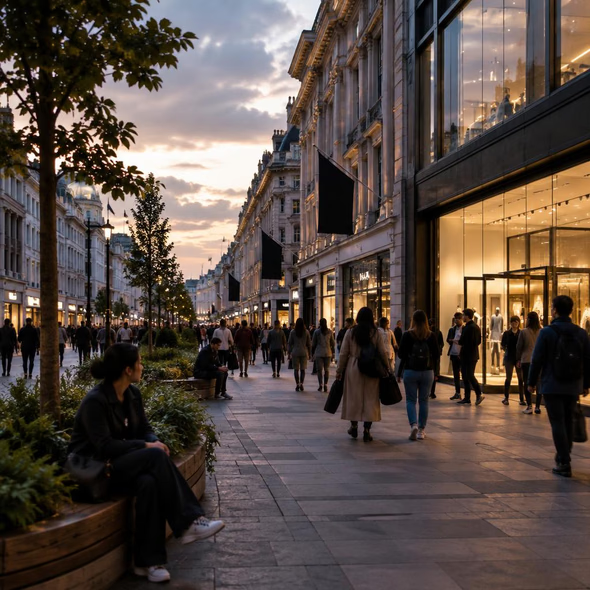
A flagship store welcomes a prospective customer; a public street owes people a less conditional welcome. Oxford Street’s commercial revival and civic usefulness can reinforce each other, but retail investment does not establish that every body has room to arrive or linger.
London’s Oxford Street has banned cars as major brands invest in flagship stores, the Financial Times reports. The changes put the shopping district’s physical space and commercial ambitions in the same frame. Removing cars offers an opportunity to make the street more comfortable for people on foot. New storefront investment suggests retailers see an audience worth courting.
A flagship is not simply a place to keep stock. The designation presents the shop as a destination, somewhere a visitor might make a special journey to enter. That ambition need not offend anyone. Attractive stores can give people pleasure, and browsing can be an outing rather than a purchasing assignment. But the storefront’s invitation and the street’s welcome carry different obligations.
Think of the street as a shared room with shops along its walls. Retailers understandably want the room to encourage spending. The public should also be able to use the room for meeting someone, catching a breath, or passing through. A person standing still should not need a receipt as a character reference.
The car ban deserves credit for the possibilities it opens, not outcomes the available reporting cannot establish. A car-free space may offer more room to walk, but the ban alone does not document an easier journey for every disabled visitor. The scheme’s precise boundaries, transport connections, and arrangements for people who need nearby vehicle access matter. So do places to sit and routes that remain clear. These are tests of the scheme, not confirmed features or failures.
Commercial success and public comfort can overlap. Someone who can rest may stay longer and visit a shop; someone who buys nothing may still make the district feel lively and sociable. The distinction becomes important when those interests diverge. If seating depends on a café order, or stopping draws scrutiny unless someone is studying a window, the public room starts acquiring a dress code written in spending power. Neither condition should be presumed here. Both deserve scrutiny wherever retail revival is presented as civic improvement.
The next assessment should therefore look beyond the polish of the flagship stores. Public authorities should make clear where people can arrive, where people can rest without paying, and what rules govern lingering. Oxford Street’s visitors do not need to acquire better shopping instincts to make the scheme work. The people setting its access and public-space rules need to make an ordinary visit possible without turning every pause into a sales opportunity.
Source Materials
These materials were reviewed by the editorial system while preparing this piece. Muerte.casa may interpret, satirize, reframe, or disagree with them.
- London’s most famous shopping street bans cars in bid to revive its fortunes Financial Times · October 25, 2026 · Primary signal · Direct source
How did this story land?
This may be changed as you like.