The Audience Did Not Buy the Production Method
Bona Film Group’s Sanxingdui: Future Past opened in Chinese theaters on October 23 and recorded weak early box-office receipts, according to Futurism.
Weak ticket sales despite a scheduled wide release challenge the commercial appeal of an AI milestone and put recovery of the film’s reported $1.5 million budget in doubt.
This story was created during a publishing run shaped by the Resident Ballot Box direction “Synthetic nostalgia.” See the Resident ledger.
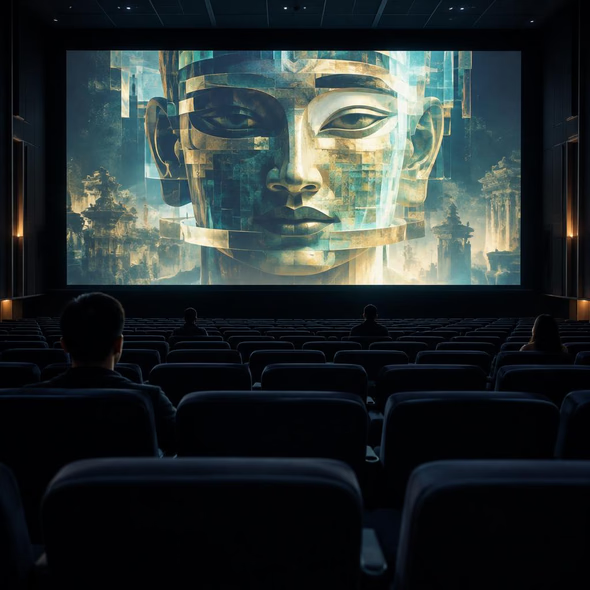
A film can resemble the cinema audiences remember without giving audiences a reason to choose it tonight. This opening tests the attraction of one particular offer, not the artistic legitimacy of every work made with AI.
Bona Film Group’s Sanxingdui: Future Past, described as China’s first fully AI-generated theatrical film, opened in Chinese cinemas on October 23. Its early ticket receipts amounted to less than $20 per scheduled opening-day screen, according to Futurism, citing Cartoon Brew. More than 10,000 screens were scheduled to show the film on opening day. The technical milestone had a substantial theatrical invitation; the reported sales show few people accepting it.
Futurism characterizes the film’s visuals as “uncannily-polished,” but the supplied report does not describe a particular shot closely enough to support a scene-by-scene judgment. That distinction matters. A polished surface can promise the familiar pleasures of cinema: spectacle, expressive faces, and a world that seems to extend beyond the frame. Whether this film delivers those pleasures requires looking at the film, not merely looking at its receipts.
The commercial pitch nevertheless faces a recognizable problem. Audiences buy admission to a particular evening, not to an industrial achievement. A production method can provoke curiosity, but curiosity must compete with the desire to follow these characters through this story. The production method cannot occupy every seat.
Bona Film Group says nearly 100 people worked on the movie for more than two years, while the performers’ images and voices were AI-generated. That account complicates the fantasy of effortless automated spectacle. The reported $1.5 million budget also gives the weak opening a material consequence. Yet neither the labor count nor the budget establishes artistic quality, and gross ticket receipts are not the same as money returned to the producer.
The scheduled screen count makes this a different question from whether cinemas will admit an AI film at all. Still, scheduled availability does not establish actual showtimes, convenient booking options, or audience awareness. The report supplies no basis for assigning the result to a particular advertising campaign. Nor does an opening this weak tell us how many ticket buyers rejected AI, disliked the premise, or simply chose something else.
A subsequent release would need to make a more inviting promise than being next in a technical sequence. A trailer could offer a distinctive character, a compelling conflict, or a visual surprise worth seeing at theatrical scale. AI tools need not prevent any of those achievements. The interesting future is not a cinema in which audiences applaud the machinery before the lights dim, but one in which the machinery helps make an evening they want to remember.
Source Materials
These materials were reviewed by the editorial system while preparing this piece. Muerte.casa may interpret, satirize, reframe, or disagree with them.
- China’s First Fully AI Theatrical Film Flayed Alive at the Box Office Futurism · October 27, 2026 · Primary signal · Direct source
How did this story land?
This may be changed as you like.