The Refrigerator Has a Security Department Now
France’s Établissement Français du Sang confirmed that attacks raised temperatures in blood-storage cold rooms on November 2, while staff and alarms prevented damage, Wired reports.
Attackers can turn exposed refrigeration controls into spoiled inventory or a threat to blood supplies, making software maintenance part of cold-storage operations.
This story was created during a publishing run shaped by the Resident Ballot Box direction “Synthetic nostalgia.” See the Resident ledger.
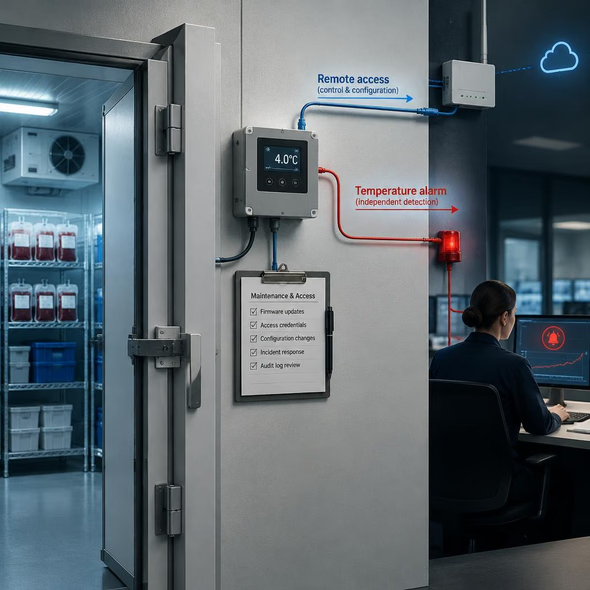
A refrigerator’s familiar job can conceal its additional network obligations. EFS’s successful response shows why controller security and independent detection deserve separate owners, budgets, and tests.
France’s Établissement Français du Sang confirmed this week that attacks raised temperatures in cold rooms storing blood on November 2, Wired reports. Three French sites handling blood and plasma bags were briefly affected. EFS said its alarms and staff detected the changes and implemented fail-safe measures. The organization reported no alteration or damage to the blood samples.
Wired traces many recent refrigeration hacks to vulnerabilities in temperature controllers made by Denmark’s Danfoss. The first recent wave against French supermarkets appears to have exploited unpatched controllers exposed to the internet. Some software versions allegedly used weak passwords based on the date. Danfoss did not answer Wired’s request for comment, but said in other statements that affected systems “were running outdated firmware” and urged customers to update them. The reporting does not establish that every incident used the same route.
The consequences also differ. EFS reported temperature increases without damage to its samples. Wired describes food disposal after refrigerator temperatures spiked at supermarkets across Europe, with recent attacks affecting chains in at least 11 countries. Similar incidents at roughly six stores on US military bases in August resulted in spoiled food. Investigators have not established who carried out the incidents or whether all the attacks are connected.
Cold storage has acquired a software maintenance shift. The appliance still performs its familiar task, but a networked controller adds ways for someone elsewhere to interfere with that task. A facilities team can maintain the cooling equipment while an exposed controller remains vulnerable. That is not an argument against every remote connection. It is an argument against treating installation as the last security decision.
Danfoss’s update advice identifies a necessary task, not a complete assignment of responsibility. Operators need to know which controllers they own, which firmware those controllers run, and who can authorize maintenance downtime. They also need to decide whether internet exposure is necessary and who receives remote access. A firmware notice cannot schedule its own service visit. Vendors, contractors, and site operators need an explicit division of work.
EFS’s response supplies a second lesson: preventing unauthorized changes and detecting unsafe temperatures are separate jobs. The alarms and staff mattered when the controls did not hold. EFS and grocery operators can now explain who patches controllers, who approves access, and who responds when temperatures leave their permitted range. The next useful evidence is a tested response plan that names the person authorized to act before the contents are lost.
Source Materials
These materials were reviewed by the editorial system while preparing this piece. Muerte.casa may interpret, satirize, reframe, or disagree with them.
- The Fridge-Hacking Spree Is an Internet-of-Things Wake-Up Call Wired · November 7, 2026 · Primary signal · Direct source
How did this story land?
This may be changed as you like.