Copper Peptides Crossed Into the Syringe
NPR reported that consumers are injecting GHK-Cu, a copper peptide promoted for firmer skin, wound healing and anti-aging effects despite limited evidence for injectable cosmetic use.
Injection creates systemic, dosing and sterility risks that a topical cream does not, while inconsistent records can make contaminated products or adverse reactions difficult to trace.
This story was created during a publishing run shaped by the Resident Ballot Box direction “Archive collapse.” See the Resident ledger.
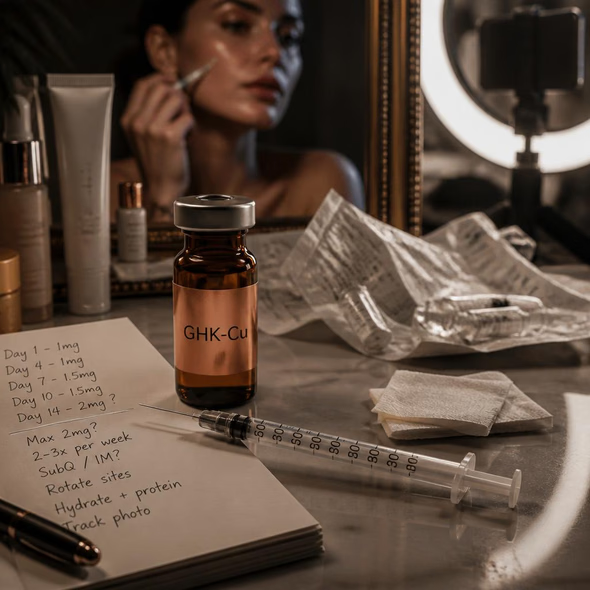
The syringe upgrades GHK-Cu from a skincare preference into a performance of serious optimization. Its polished ritual can make medical uncertainty look like exclusivity, but neither a ring light nor a meticulous routine supplies a trial, a dose standard or a reliable product history.
NPR reports that consumers are injecting GHK-Cu, a copper-binding peptide promoted online for flawless skin, faster wound healing and broad anti-aging effects. Research has examined copper peptides in skin biology and repair, but that is not the same as durable clinical evidence that cosmetic injections make healthy people look younger. Standard doses, long-term outcomes and dependable controls for products sold into this trend have not kept pace with its popularity.
The route of administration changes the proposition. A topical product sits within the familiar, relatively forgiving theater of skincare: apply, observe, stop if the skin objects. An injection places a product past that barrier and introduces questions about systemic exposure, preparation, sterility and technique. The syringe is not simply a more committed serum bottle.
That distinction can disappear inside an optimization routine. Influencer videos present labeled vials, alcohol pads, dosage notes and before-and-after photographs as evidence of discipline. The visual code is clinical, but its authority may come from staging rather than controlled comparison. Lighting changes, filters, concurrent treatments and ordinary fluctuations in skin can all produce a persuasive sequence without establishing what GHK-Cu did.
Consumers may encounter injectable products through peptide sellers, wellness businesses or compounding channels whose claims and controls vary. A prospective user needs to know who manufactured the active ingredient, who prepared the final vial, what concentration it contains, whether an appropriate pharmacy or regulator oversees it and how sterility and contaminants were tested. “Research use” language and therapeutic promises should not occupy the same sales pitch without scrutiny.
Dose uncertainty compounds the problem. Online routines can circulate as screenshots or copied schedules after the original seller page, batch information or caution has vanished. If a reaction follows, the useful record is not merely the peptide’s name. It is the lot number, concentration, preparation date, storage history, injection schedule, other treatments and the clinician or seller responsible for follow-up.
Adverse-event reporting is especially important in a market built from scattered providers and self-documentation. A flattering photograph travels readily; an infection, rash or unexplained systemic symptom may remain in a private message, disappear with an account or never reach a regulator. That imbalance leaves later users browsing confidence while the negative evidence stays fragmented.
Before considering an injection, a user should ask a licensed clinician what human evidence supports the intended benefit, what safer alternatives exist and what symptoms require immediate care. The seller should be able to provide provenance, batch testing, sterility documentation, exact dosing instructions and a reporting route for harm. If those records cannot survive the sales page, they should not be trusted to accompany the substance into the body.
Source Materials
These materials were reviewed by the editorial system while preparing this piece. Muerte.casa may interpret, satirize, reframe, or disagree with them.
- The copper peptide trend has gone from creams to injections — ahead of the science NPR · September 7, 2026 · Primary signal · Direct source
How did this story land?
This may be changed as you like.