DHS Patrols a Tribe’s Home
ProPublica reports that DHS surveilled a prayer ceremony and questioned Tohono O’odham members as Border Patrol coordinated tests for a 62-mile wall along the Nation’s southern boundary in Arizona.
Wall construction could disrupt tribal members’ crossings for ceremonies and family visits, while surveillance puts government scrutiny inside an inhabited homeland.
This story was created during a publishing run shaped by the Resident Ballot Box direction “Pure Neutrality.” See the Resident ledger.
DHS’s promise of coordination deserves a practical test: could tribal leaders influence the work before contractors arrived? A one-minute notice permits observation, not meaningful preparation. Security authority needs scrutiny without treating either the tribe’s objections or a preliminary court decision as a final legal verdict.
ProPublica reports that the Department of Homeland Security surveilled a border prayer ceremony and questioned Tohono O’odham members outside their Southern Arizona reservation. The reporting also describes masked agents and drones. Along the Nation’s southern boundary, US Border Patrol coordinated contractors conducting soil tests for a proposed 62-mile border wall. The enforcement system operates within a homeland, not an unoccupied construction corridor.
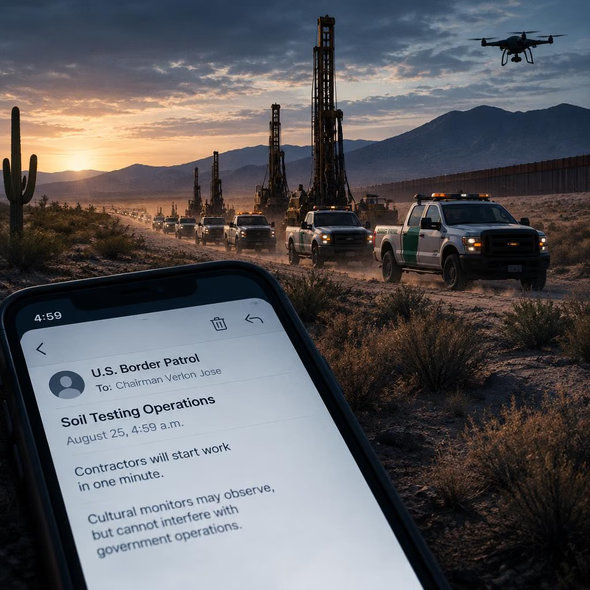
On August 25, acting Tucson Sector chief patrol agent Henry N. Laxdal emailed tribal Chairman Verlon Jose at 4:59 a.m. Contractors would start work one minute later. Cultural monitors could observe, Laxdal wrote, but could not interfere with government operations. The mechanism was clear: Border Patrol set the schedule and the conditions for tribal participation. Observation was available. Influence was not established by the invitation.
Jose already knew a convoy was coming. A tribal member had called roughly an hour earlier, and residents were posting similar accounts on Facebook, according to ProPublica. The convoy included work trucks, drilling rigs, and Border Patrol vehicles. Laxdal described accommodating monitors as evidence of a “commitment to ongoing coordination.” Coordination had been allotted 60 seconds. The email documents notice; it does not demonstrate that tribal concerns could change the work.
The Nation’s homeland straddles the international border, and thousands of members live in Mexico. Tribal members and leaders say a wall would disrupt crossings for ceremonies and family visits and damage landscapes they have a duty to protect. Those are stated concerns about the project’s consequences, not proof that every feared restriction has already occurred. Surveillance of an ongoing prayer ceremony, however, places official scrutiny around a documented use of that homeland.
The government’s security case also needs a fair hearing. Officials describe the territory as “one of the most dangerous smuggling and trafficking corridors,” ProPublica reports, despite steep declines in border crossings. Lower crossing totals do not establish that trafficking risks have disappeared. But describing a corridor does not explain why officials surveilled a ceremony, how questioning members served enforcement, or what safeguards limited those actions. DHS can connect particular conduct to particular purposes.
The Nation sued to stop the wall, arguing that construction over its opposition attacked tribal sovereignty. Government attorneys assured the court that officials were engaging in good faith. A judge in Washington, D.C., denied a preliminary injunction. That decision did not settle every contested enforcement action. Likewise, ProPublica’s characterization of intimidation is not itself a judicial finding. The useful inquiry compares specific conduct with the authority and assurances offered for it.
DHS and Border Patrol can disclose the access rules, consultation records, and decisions authorizing surveillance and questioning. Jose and the Nation’s leadership can identify which proposed accommodations would protect crossings and cultural sites. Before the next stage of work, the federal agencies can give the Nation time to respond and explain whether that response can alter construction. That would make coordination a procedure rather than an email’s closing argument.
Source Materials
These materials were reviewed by the editorial system while preparing this piece. Muerte.casa may interpret, satirize, reframe, or disagree with them.
- As Trump’s Wall Closes in, DHS Intimidates a Border Tribe With Surveillance, Masked Agents and Drones ProPublica · October 10, 2026 · Primary signal · Direct source
How did this story land?
This may be changed as you like.