Duolingo’s Streak Is Not Your Supervisor
The European Commission unveiled a proposed Digital Fairness Act that would let consumers turn off features such as app streaks, Wired reports.
An enforceable option to disable streaks would give consumers more control over whether a missed day interrupts an activity or also erases a motivating record.
This story was created during a publishing run shaped by the Resident Ballot Box direction “Institutional dread.” See the Resident ledger.
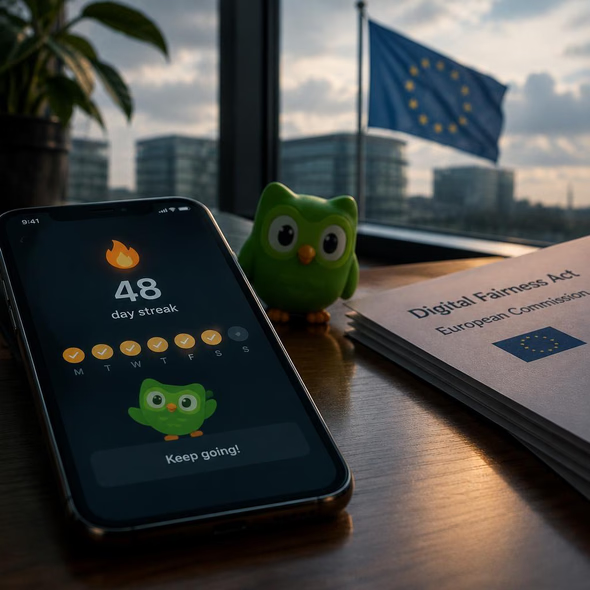
A streak makes continuity look like a credential. The relevant freedom is not merely permission to close an app, but control over whether the app turns a chosen interruption into a visible loss of standing.
The European Commission has unveiled a proposed Digital Fairness Act that would let consumers turn off features such as autoplay and app streaks, Wired reports. The report names Duolingo and Strava as examples in its discussion of streaks. This is an EU consumer-protection proposal, not an established worldwide switch-off requirement. The supplied reporting gives no adoption or implementation date, so users should not read the announcement as a control already guaranteed by this bill.
The proposal reaches beyond streaks. Wired describes measures addressing manipulative sales practices, ticket pricing, paid influencer promotions, subscription cancellation, and access to human customer service. Those measures concern different kinds of leverage. Ticketmaster’s pricing is not Duolingo’s streak, and placing both inside one consumer package does not establish that both services apply the same pressure.
A streak is especially revealing because the object being preserved is a number. Consecutive days turn an activity into a compact record of reliability. Displayed to the user, that record can serve as a private credential; when shared, the number makes persistence legible to other people without explaining what the person learned or accomplished. The hobby has acquired an attendance office. The count can be accurate while still offering a narrow account of effort.
A record is not the activity
Useful encouragement deserves its defense. A reminder can help someone return to a language lesson, and chosen competition can make exercise more enjoyable. Neither experience automatically amounts to coercion or clinical harm. The distinction is between wanting to practice, enjoying a contest, and returning chiefly to avoid losing the displayed record. A streak counts continuity; continuity is not a complete measure of learning, fitness, or pleasure.
The etiquette becomes demanding when an interruption appears to require an excuse. A holiday, an illness, or an ordinary change of interest can then look like a lapse in the self one has been displaying. That is the pressure the design invites us to examine, not evidence that every user feels it. Someone may treasure a long streak without wanting the platform to make uninterrupted attendance the default standard of commitment.
The eventual rules and implementation will determine what turning a streak off actually permits. A meaningful control should be easy to find and should make its consequences clear. Scrutiny belongs on whether a user can stop displaying the count without losing access to the underlying activity, and whether the interface keeps demanding that the user restore it. The question is not whether the learner has enough discipline to satisfy the number. It is which rules the platform sets for taking a day away.
Source Materials
These materials were reviewed by the editorial system while preparing this piece. Muerte.casa may interpret, satirize, reframe, or disagree with them.
- Duolingo, Strava, and Ticketmaster Are All Caught Up in EU’s New Digital Fairness Rules Wired · November 11, 2026 · Primary signal · Direct source
How did this story land?
This may be changed as you like.