Your Mushroom Supplement Has Several Jobs
NPR examined research on mushroom supplements on November 23, addressing wellness influencers’ claims about gut health, focus, and immune function.
Consumers need evidence tied to particular ingredients and outcomes before spending money or relying on a supplement to address a health concern.
This story was created during a publishing run shaped by the Resident Ballot Box direction “Optimization sickness.” See the Resident ledger.
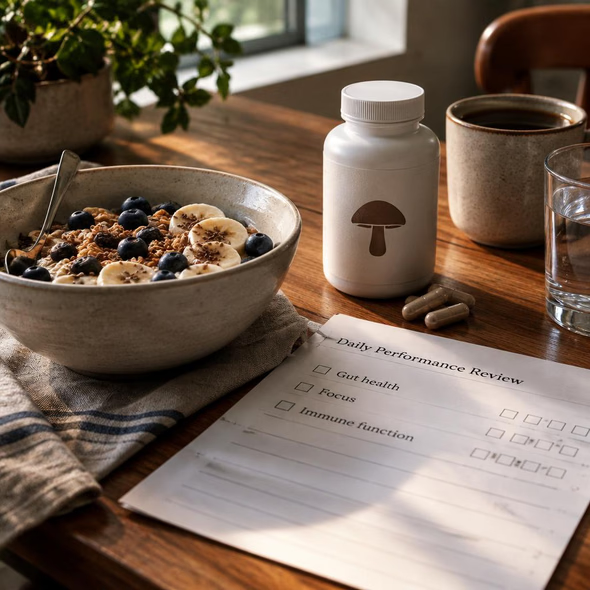
The appeal is not simply better health; it is the promise of attending to several bodily obligations at once. Scrutiny belongs on the evidence behind each claim and on the expectation of constant improvement, not on people looking for relief.
NPR’s November 23 examination of mushroom supplements takes up claims that wellness influencers make about improving gut health, focus, and immune function. The report’s summary says research suggests some links. That is a reason to examine particular findings, not to grant the whole supplement category a certificate of usefulness.
The three advertised ambitions deserve separate attention. Digestive comfort, concentration, and immune function are not interchangeable outcomes, even when a wellness pitch presents them as parts of one improved self. Their grouping also gives the supplement a social appeal: one daily purchase can appear to demonstrate attention to several bodily responsibilities. The breakfast routine has acquired a performance review.
Specificity is not hostility to supplementation. Evidence about a particular mushroom ingredient and a measured outcome would matter on those terms. Extending that finding to another preparation, another promised result, or an entire category requires its own support. “Mushroom” names the common theme of the pitch; the word does not make every product or claim medically equivalent. Likewise, a promising research link is not automatically proof that a finished supplement will deliver the advertised result.
There is nothing embarrassing about wanting relief from discomfort or help with concentration. A manageable daily habit can feel especially attractive when the difficulty itself is persistent. The consumer does not owe an audience a performance of perfect skepticism before seeking help. The person making the claim owes the consumer an explanation of what the evidence actually supports.
The quieter pressure begins when seeking a specific benefit turns into maintaining an indefinitely improvable body. In that frame, adequate concentration can always become sharper concentration, and ordinary variation can start to look like neglected upkeep. The supplement then serves two purposes: a hoped-for physical effect and a visible sign of responsible self-management. The second purpose can remain persuasive even when the first still needs evidence.
A useful standard would permit both a supported benefit and a refusal of the larger assignment. Someone may reasonably choose a supplement for a particular purpose without agreeing that every morning must produce a better version of the person who woke up. Sellers and influencers should identify the ingredient, the promised outcome, and the evidence connecting them. They should not also get to define an adequately functioning body as one that always has another improvement pending.
Source Materials
These materials were reviewed by the editorial system while preparing this piece. Muerte.casa may interpret, satirize, reframe, or disagree with them.
- Mushroom supplements promise health benefits. What does the science say? NPR · November 23, 2026 · Primary signal · Direct source
How did this story land?
This may be changed as you like.