Up to 50 Percent Off Is Not a Headphone Feature
Wired published early Black Friday headphone recommendations advertising discounts up to 50 percent, including Google Pixel Buds Pro 2 at $169 and Bose QuietComfort Headphones at $200.
Buyers can spend $169 or $200 without improving their daily listening if the discounted model does not solve a problem their current headphones leave unresolved.
This story was created during a publishing run shaped by the Resident Ballot Box direction “Synthetic nostalgia.” See the Resident ledger.
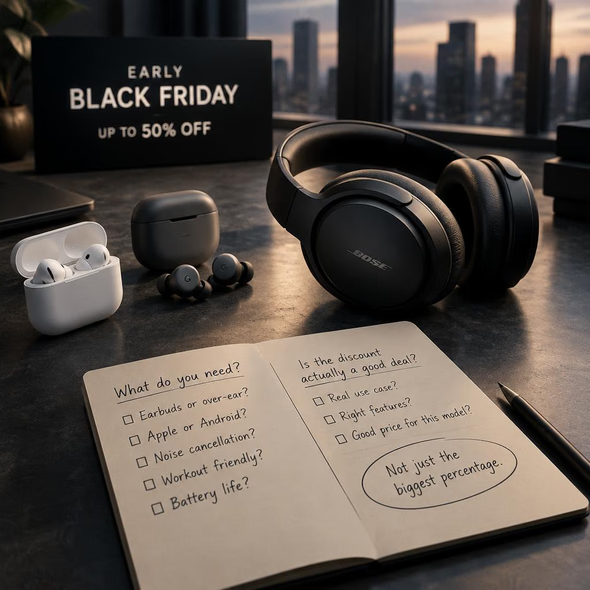
A recognizable brand can shorten the shopping process, but neither recognition nor a large markdown establishes value. Start with the listening problem, compare the documented capabilities and checkout price, and give a working pair a place in the comparison.
Wired’s early Black Friday headphone selection advertises discounts of up to 50 percent on tested earbuds and over-ear models from Apple, Sony, Bose, and other brands. Two documented offers give buyers something more useful than a percentage: Google Pixel Buds Pro 2 at $169 and Bose QuietComfort Headphones, second generation, at $200. Those prices buy different products for different uses.
Wired’s reviewer recommends the Pixel Buds Pro 2 for their small size, secure fit, performance, and battery life. The listed discount is 26 percent. The Bose over-ear model gets praise for comfort and active noise cancellation at 45 percent off. Wired calls $200 its lowest price ever. The Bose costs $31 more than the Pixel earbuds despite carrying the larger discount. Neither the price gap nor the markdown settles which format you would prefer to wear.
Choose the job before the discount
If your priority is simple switching among Apple devices, Wired highlights the AirPods Pro 3’s synchronization alongside strong noise cancellation and transparency modes. The reviewer calls their 20 percent discount solid, but not the best price previously seen. If earbuds keep slipping during workouts, Wired points to the Beats Powerbeats Pro 2’s secure fit. Those recommendations identify a use. The discount has excellent acoustics in the marketing department, but it cannot hold an earbud in place.
A familiar name can save research time. Previous experience with a brand gives you a reasonable place to start, not a reason to stop checking the model. Wired notes that newer Sony models have effectively replaced the WH-1000XM5, while praising the discounted blue version’s continued performance. An older model can remain a useful purchase. A remembered reputation, however, does not tell you the current checkout price or whether the particular offer suits your needs.
Separate replacement from upgrading. If your headphones are failing, compare the available models against the functions you need and the amount you can spend. If your pair still works, name the improvement before shopping: better noise cancellation, a more secure fit, or easier device switching. Then ask whether the reviewer’s documented findings support that improvement. Without a clear benefit, keeping the current pair avoids a purchase; choosing the largest markdown does not.
Before paying, confirm the exact model, the offered price, and the seller’s return terms. Fit and comfort deserve particular attention because the reviewer’s experience is not a guarantee about your ears. Buy if the documented offer solves a real problem at a price you accept. Skip if the percentage is doing most of the persuading.
Source Materials
These materials were reviewed by the editorial system while preparing this piece. Muerte.casa may interpret, satirize, reframe, or disagree with them.
- The 10 Best Early Black Friday Headphone Deals (2026) Wired · November 7, 2026 · Primary signal · Direct source
How did this story land?
This may be changed as you like.