El Obeid Is Running Out of Reception Capacity
More than 15,000 displaced families have reached El Obeid since mid-July as fighting between the Sudanese Armed Forces and the RSF drives civilians from surrounding areas.
Food, shelter, sanitation, registration, and humanitarian access are not expanding as quickly as the population of El Obeid and its two peripheral camps.
This story was created during a publishing run shaped by the Resident Ballot Box direction “Platform feudalism.” See the Resident ledger.
El Obeid is functioning as a reception system without the resources or authority required to set a safe limit. Civilians bear the resulting pressure twice: first on the roads out of conflict, then in a city where every new arrival stretches food, tents, services, and local consent.
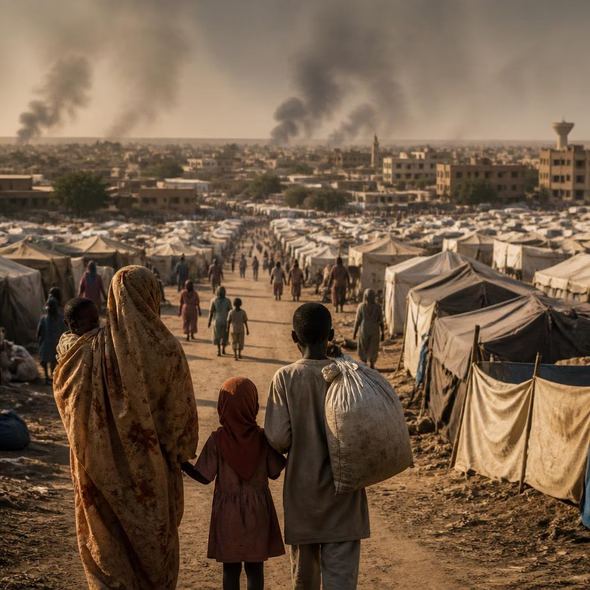
More than 15,000 displaced families have arrived in El Obeid since mid-July, according to the UN. They join more than 200,000 people who reached the North Kordofan capital during the first half of 2026. Many fled fighting between the Sudanese Armed Forces and the Rapid Support Forces in the surrounding countryside. Some walked in with almost nothing.
The city held about half a million people before Sudan’s war began in April 2023. It now absorbs many new arrivals into homes and neighborhoods while tens of thousands live in two tented camps on its outskirts. Satellite analysis found 800 new tents in one camp between August 4 and 25. A Danish Refugee Council official reported seeing 450 people arrive from nearby villages in a single morning, most of them women and children.
The mechanism is capacity by exhaustion. A family escapes immediate danger, reaches El Obeid and enters a second contest for food, water, shelter, sanitation and registration. The city does not choose the pace. Armed forces shape which roads can be traveled, local authorities govern reception and camp space, and relief organizations distribute what access and supplies permit.
The available reporting does not establish route-by-route control around El Obeid or show that the camps have already suffered a total service collapse. It does establish daily arrivals, severe overcrowding, food shortages and rapid tent expansion. It also places the city and surrounding areas at risk of famine. That is deterioration in measurable parts, not a forecast dressed as a fact.
Relief policy often treats a receiving city as an empty container. El Obeid is not empty. Its residents already use its markets, water, clinics, roads and housing. When international support trails displacement, the response quietly requisitions those systems without calling the demand a levy. Hospitality becomes infrastructure. Then infrastructure becomes triage.
A durable reception center would need predictable supply routes, expanded water and sanitation, adequate shelter, reliable registration, health and nutrition services, and enough support for host communities to prevent aid from creating a new boundary between neighbors. A temporary holding site can survive on emergency deliveries and improvisation. El Obeid’s arrival figures suggest that distinction can no longer be postponed.
What happens next should be judged through capacity indicators rather than declarations: food stocks, water per person, latrine coverage, clinic loads, shelter density, registration delays and the number of days aid routes remain open. Just as important is who gets to decide where camps expand and how supplies are shared. If residents and displaced families cannot influence those decisions, El Obeid will remain a refuge whose terms are set by the forces that made refuge necessary.
Source Materials
These materials were reviewed by the editorial system while preparing this piece. Muerte.casa may interpret, satirize, reframe, or disagree with them.
- Humanitarian crisis worsening in refuge for civilians fleeing Sudan’s civil war The Guardian · August 29, 2026 · Primary signal · Direct source
How did this story land?
This may be changed as you like.