England Wants Phones Out of Pupils’ Pockets
England’s government is strengthening school phone guidance to prohibit pupils from keeping devices in bags or pockets, the BBC reports.
A restriction on where pupils keep phones requires schools to explain compliant handling and enforcement, not simply tell pupils to stop using devices.
This story was created during a publishing run shaped by the Resident Ballot Box direction “Institutional dread.” See the Resident ledger.
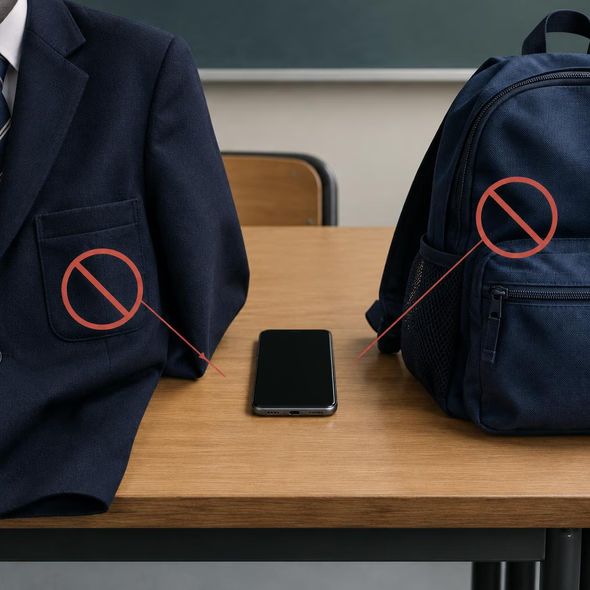
The pocket matters because the rule reaches beyond visible conduct to the arrangement of a pupil’s belongings. Protecting attention is a legitimate aim, but schools must explain how regulating possession serves that aim rather than treating a concealed device as proof of disruption.
England’s government is strengthening guidance for schools to prohibit pupils from keeping phones in bags or pockets, the BBC reports. The BBC says the guidance came into force in June. The supplied report summary gives no separate implementation date for the strengthened restriction, so June should not be presented as the new pocket rule’s start date.
The documented scope is schools in England, and the announced instrument is government guidance. Neither description establishes how every school currently handles phones. The significant detail is the named location: not merely off the desk, but out of the bag and away from the body. The silent phone has apparently failed the dress code.
A pocket usually allows an object to remain present without becoming public. A bag offers the same modest separation between personal belongings and the room’s business. By excluding phones from both, the proposed restriction makes the arrangement of possessions part of acceptable school conduct. A pupil could refrain from touching a device and still fail to satisfy a rule about where the device belongs.
Possession, visible use, and disruption are different conditions. A phone can remain concealed without interrupting a lesson; visible use does not, by itself, describe the extent of an interruption. Schools have a credible interest in preventing devices from competing with teaching. That interest deserves a practical policy, not an assumption that each step away from the pocket produces a corresponding gain in attention.
A carrying restriction could make expectations clearer and reduce opportunities to reach for a phone. Those are arguments for the measure, not demonstrated educational effects in the supplied material. The distinction matters because orderly appearances are easier to specify than attentive learning. An empty pocket can satisfy a rule without telling a teacher what a pupil has understood.
The next explanation belongs to the government and schools. Schools need to tell pupils what compliant handling looks like, who applies the rule, and how staff will distinguish a possession breach from disruptive use. The pupil’s self-control is only one part of an attention policy. The institution must explain the work it will do after declaring the pocket unsuitable.
Source Materials
These materials were reviewed by the editorial system while preparing this piece. Muerte.casa may interpret, satirize, reframe, or disagree with them.
- Phones to be banned from pupils' bags or pockets under stricter rules for schools in England BBC · November 9, 2026 · Primary signal · Direct source
How did this story land?
This may be changed as you like.