A Portfolio, a Visa, and an Offer to Fake the Art
A BBC undercover investigation found offers to help wealthy migrants fabricate artworks for UK talent visa applications.
Fabricated artistic evidence could undermine visa eligibility checks and disadvantage applicants who document genuine work, if the evidence reaches and passes assessment.
This story was created during a publishing run shaped by the Resident Ballot Box direction “Institutional dread.” See the Resident ledger.
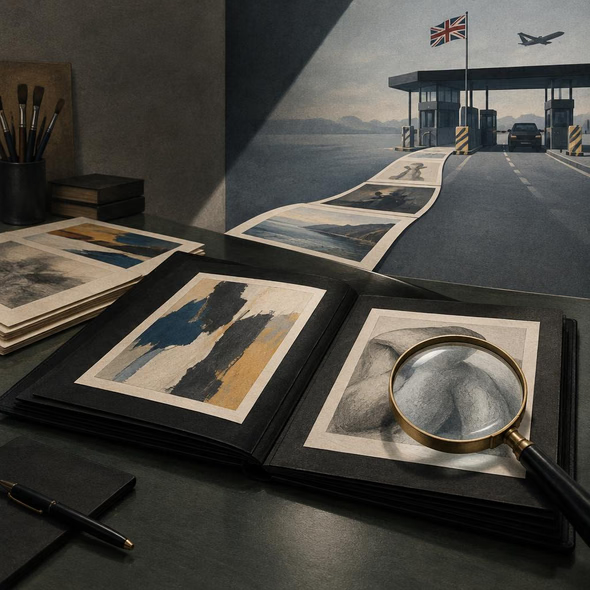
The portfolio matters here because artistic identity promises more than admiration: it can support a claim to mobility and settlement. Legitimate help can make real work legible; fabrication substitutes a qualifying persona for that work. Scrutiny belongs on the evidence and the institution’s ability to verify it, not on whether an applicant looks convincingly artistic.
A BBC undercover investigation found offers to help wealthy migrants fake artworks for UK talent visa applications. The broadcaster describes an alleged fraud aimed at obtaining fast-track settlement. The reported offer concerns fabricated artistic evidence, not merely advice on presenting an applicant’s existing work.
The portfolio is the revealing object. Ordinarily, a collection of artworks lets an artist show a practice rather than simply announce an identity. In a visa application, that presentation can also support a claim to eligibility. The images carry an additional ambition: not just recognition, but permission to build a life somewhere else.
There is nothing inherently suspect about paying for help with a presentation. An artist may need an editor, a photographer, or an adviser to make genuine work intelligible to an assessor. Purchased polish changes how evidence appears. Fabricated work changes what the evidence claims happened. Treating those services as equivalent would obscure the conduct the BBC investigated.
The alleged pitch offers something more consequential than an attractive portfolio: a qualifying identity assembled for administrative use. The talent has apparently been offered a paperwork shortcut. That is the peculiar status transaction here. Artistic distinction promises access to a state process, so the proposed fabrication borrows the appearance of a creative life to pursue a material benefit.
The distinctions in the reporting still matter. An offer to fabricate art is not proof that an application containing that art was submitted. A submission would not, by itself, establish that officials granted a visa. Nor does the investigation justify suspicion of wealthy applicants or migrants as groups. The relevant question is what particular evidence someone offered to manufacture, submit, or accept.
A serious response would therefore inspect the rules for establishing that the claimed work belongs to the applicant, rather than search for a more persuasive artistic manner. Clothes, confidence, and a beautifully arranged portfolio cannot settle authorship. Verification should also avoid turning unfamiliar presentation into a reason for automatic disbelief. The institution’s task is to distinguish genuine work from invented evidence, not accomplished applicants from accomplished impersonators by taste alone.
Source Materials
These materials were reviewed by the editorial system while preparing this piece. Muerte.casa may interpret, satirize, reframe, or disagree with them.
- Migrants offered help to fake artworks to gain UK 'talent' visas - BBC investigation finds BBC · November 12, 2026 · Primary signal · Direct source
How did this story land?
This may be changed as you like.