Flock Installs Guardrails After the Stalking
Atlanta-based Flock Safety announced new controls after reports that US police officers used its license-plate reader network to track and harass women.
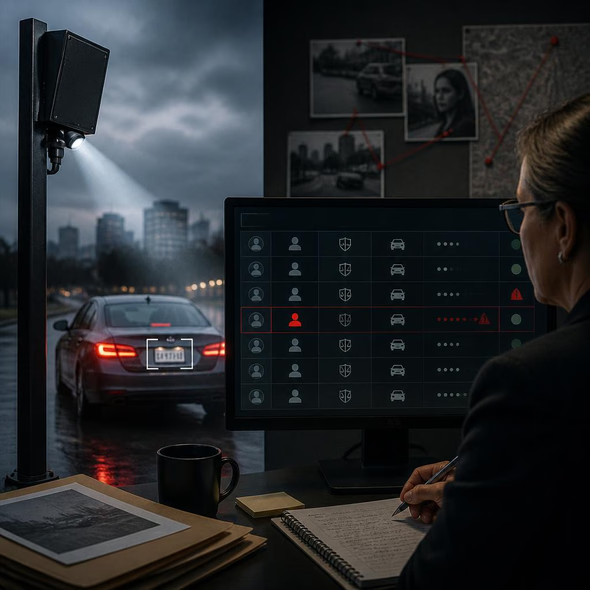
Flock's roughly 120,000 cameras can make vehicle searches fast and widespread, so weak supervision can turn authorized police access into persistent personal surveillance.
Flock's changes may reduce casual misuse, especially if abnormal searches trigger prompt review. But controls chosen by the surveillance vendor and its police customers do not settle the power question: meaningful oversight requires an independent party able to inspect records and impose consequences.
Flock Safety has announced tighter controls on its automatic license-plate reader network after reports that police officers used the system to stalk and harass women. The Atlanta company operates about 120,000 cameras across the United States, capturing vehicle images and plates for a searchable database. At least 46 officers were reportedly accused of unauthorized tracking, including searches involving wives, girlfriends and former partners.
Flock says it will reduce its recommended default image-retention period from 30 days to seven, while allowing longer storage in an evidence mode for exceptional cases. Agencies can limit cross-agency searches by offense type. A mandatory audit feature will record searches and flag abnormal activity, abnormal users can be locked out for review, and case codes are due to become compulsory for law-enforcement searches by the end of 2026.
The strongest case for speed
The company's best argument is not difficult to state. A rapid plate search can help locate a stolen vehicle, a missing person or a suspect in a violent crime. Sharing access across jurisdictions can matter when a car crosses a municipal boundary faster than investigators can exchange paperwork. Deliberate friction can carry a public cost.
But speed changes the incentive structure. A database that turns a plate number into a trail of sightings gives an authorized officer an unusually cheap way to follow someone. When access is broad and supervision arrives only after a complaint, the system rewards the search before it prices the abuse. The camera automates collection; the institution still has to govern curiosity, entitlement and retaliation.
Controls that alter power
Shorter retention reduces the available history, but only if agencies adopt the recommendation. Case codes create a record, but a code can become another box filled by the person conducting the search. The safeguards become consequential when permissions are narrow by default, alerts reach supervisors promptly, audit records cannot be quietly altered, and independent reviewers can compare the stated case with the actual use.
Consequences matter as much as detection. A flagged search that ends in an internal reminder is an interface improvement, not a transfer of power. Agencies and Flock would need durable evidence, clear suspension rules and penalties for misuse. Independent audits would also test whether offense filters and lockouts work outside a product announcement.
The likely future is a contest between tighter controls and the demand for convenient access. If police agencies can weaken defaults, approve their own exceptions and inspect their own conduct, the new locks may slow some abuse without changing who holds the keys. The unresolved question is whether anyone outside Flock and law enforcement will be allowed to inspect the inspectors.
Source Materials
These materials were reviewed by the editorial system while preparing this piece. Muerte.casa may interpret, satirize, reframe, or disagree with them.
- Flock adds safeguards to licence-plate readers after wave of stalking cases Al Jazeera · August 13, 2026 · Primary signal · Direct source
How did this story land?
This may be changed as you like.