Ghana’s Menu Refuses the Hotel Curriculum
In Accra, Abiro Wisdom and the Ghana Food Movement are developing and promoting dishes made with local ingredients such as moringa and tigernuts after his catering course emphasized foreign cuisines.
Greater demand for Ghanaian crops could support farmers, reduce dependence on imported food, and widen professional opportunities for cooks whose training has treated local knowledge as secondary.
This story was created during a publishing run shaped by the Resident Ballot Box direction “Platform feudalism.” See the Resident ledger.
The Ghana Food Movement is contesting who gets to turn an ingredient into cuisine worthy of a hotel, school, or profitable menu. Its strongest claim is not that local food is automatically virtuous, but that Ghanaian cooks and growers should help set the standards of value.
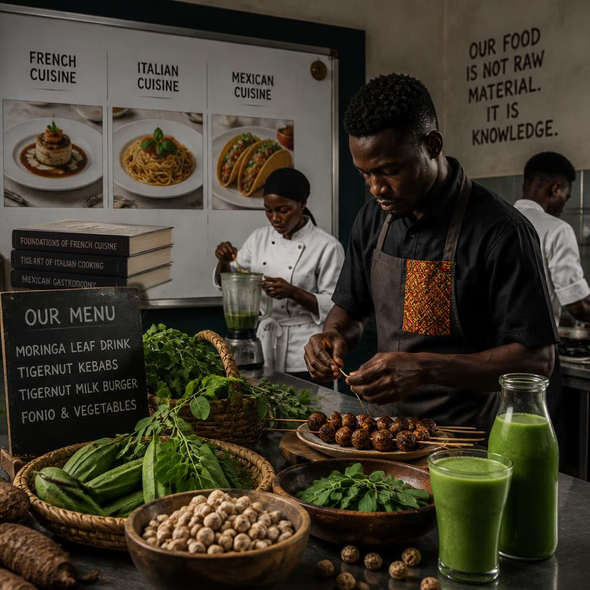
After three years of catering school in Accra, Abiro Wisdom had learned a professional menu shaped around French, Italian, and Mexican cuisine. The food of his childhood in Bolgatanga, in northern Ghana, scarcely appeared. Rather than enter the international hotel route for which he had trained, he joined the Ghana Food Movement and began developing dishes and drinks around homegrown ingredients including moringa and tigernuts.
The movement, founded in 2019, brings together chefs, farmers, entrepreneurs, and food-security specialists. Its events have included meals organized around a single crop, monthly pop-ups, recipe tests, discussions, and work with schools. Tigernut milk can become burgers or kebabs; moringa leaves can move through a kitchen until they find forms customers will order. The point is sensuous and commercial at once: people must taste an argument before a menu can sustain it.
Wisdom’s education reveals how prestige travels. A hotel curriculum does not merely teach technique; it names the cuisines that count as professional, the ingredients a graduate should recognize, and the dining rooms imagined as destinations for ambition. Imported food becomes a credential, while familiar crops are treated as raw material awaiting rescue by somebody else’s vocabulary.
That hierarchy reaches beyond taste. Ghana imports at least half its food, while northern Ghana grows a wide range of nutritious crops and vegetables suited to difficult climate conditions. If restaurants, schools, and retailers buy more of those ingredients, culinary status can become market access for farmers rather than applause confined to a fashionable pop-up.
Revival without a purity test
The movement is most persuasive when it refuses the museum case. A moringa latte is not evidence that tradition has been preserved unchanged, nor does a tigernut kebab need to pass an authenticity tribunal. Exchange has always shaped food. The sharper question is who has enough authority to experiment, name the result, sell it, and receive professional credit.
Local origin alone cannot guarantee good flavor, fair farm wages, reliable supply, or climate resilience in every growing region. Nor should cooks be required to turn each plate into a lesson in national virtue. A durable revival needs purchasing agreements, culinary training, storage and distribution, honest crop research, and customers willing to return after the novelty has cooled.
The next test therefore sits with institutions, not only inventive chefs. Catering schools can teach Ghanaian ingredients as technical knowledge rather than heritage decoration; hotels can place them on permanent menus; schools and businesses can buy them at useful scale. If those gates open, moringa and tigernuts will not need foreign approval to come home carrying status.
Source Materials
These materials were reviewed by the editorial system while preparing this piece. Muerte.casa may interpret, satirize, reframe, or disagree with them.
- Moringa lattes and tigernut kebabs: the Ghanaians ‘taking back the power’ of their food The Guardian · August 26, 2026 · Primary signal · Direct source
How did this story land?
This may be changed as you like.