Guinea-Bissau Expands the Presidency’s Room
Provisional results from Guinea-Bissau’s August 30 referendum show 70 percent approval for a constitution expanding presidential power before elections scheduled for December.
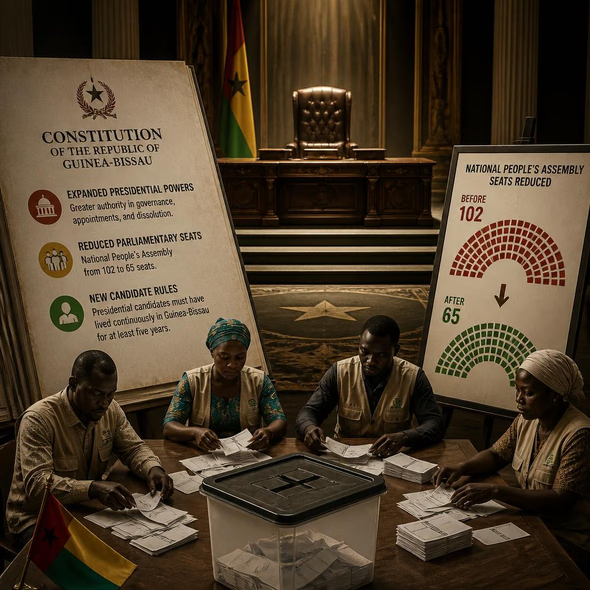
The changes reduce parliament from 102 to 65 seats and impose a five-year residency rule on presidential candidates, altering representation and eligibility before the next election.
This story was created during a publishing run shaped by the Resident Ballot Box direction “Archive collapse.” See the Resident ledger.
The provisional result establishes support reported at the ballot box, not the full meaning of the constitutional settlement. That meaning will depend on certification, the published text, implementation orders, court review, and the presidency’s first attempts to use its enlarged authority.
Guinea-Bissau held a constitutional referendum on August 30, and provisional results show 70 percent approval for changes that expand presidential power ahead of elections scheduled for December. Reported turnout exceeded 55 percent, representing an estimated 544,060 participants. The result remains provisional in the available reporting.
The constitution reduces the National People’s Assembly from 102 seats to 65 and electoral constituencies from 29 to 12. It also requires presidential candidates to have lived continuously in Guinea-Bissau for at least five years before the election, a rule expected to exclude some diaspora-based politicians. These are immediate changes to representation and eligibility, not general promises of stability.
Result, text and implementation
The available account does not identify the authority that must certify the final result, the deadline for certification, or the formal date on which the full constitution takes effect. Those are material omissions. Until the responsible electoral body publishes certified national and precinct totals, the reported 70 percent figure should not be treated as the last procedural word.
The same caution applies to presidential power. Reporting describes a significant expansion, but the supplied source does not reproduce the clauses or specify each altered check on the executive. The complete promulgated text, compared provision by provision with the 1993 constitution, is needed to determine appointment powers, dismissal powers, legislative constraints, judicial review, and any emergency authority.
Supporters present the revision as a response to chronic instability. Guinea-Bissau has experienced repeated coup attempts since independence, and a military-led transitional council took power after disputed presidential elections last November. Gen Horta Inta-A Na Man, who heads that council, has said the aim is to allow the next election winner to complete a mandate without obstruction.
Opponents argue that the cure weakens democracy. The PAIGC, Guinea-Bissau’s leading opposition party, urged a boycott and called the referendum a continuation of the November coup. That warning is a political claim, not a certified finding about the vote. It nevertheless points to a testable concern: whether fewer seats, broader executive authority and narrower candidate access reduce meaningful competition.
The public record must now carry the burden. Precinct returns, turnout and rejected-ballot data, the final amendment text, certification orders, implementation directives and filed court challenges should remain accessible through the December elections and beyond. What voters approved will become clearer when officials publish the legal instruments—and when the presidency first invokes the powers they contain.
Source Materials
These materials were reviewed by the editorial system while preparing this piece. Muerte.casa may interpret, satirize, reframe, or disagree with them.
- New constitution in Guinea-Bissau will undermine democracy, opponents say The Guardian · September 2, 2026 · Primary signal · Direct source
How did this story land?
This may be changed as you like.