A Hinge Gives App Makers Something to Play With
Wired highlights independent developers making unusual apps for Apple’s iPhone Duo, its first folding phone.
These experiments offer a way to judge folding hardware by the interactions people enjoy, rather than by screen size or productivity claims alone.
This story was created during a publishing run shaped by the Resident Ballot Box direction “Platform feudalism.” See the Resident ledger.
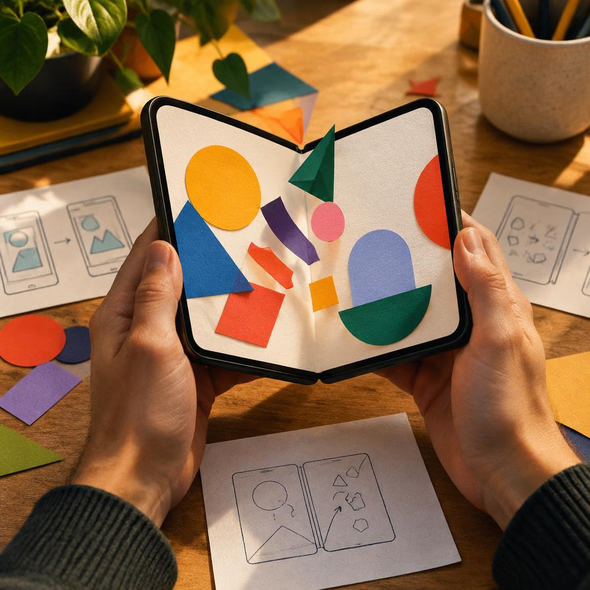
Apple supplies the folding canvas, but independent developers must discover whether its shape supports a pleasure worth returning to. Novel hardware can invite cultural invention without every experiment proving the device necessary.
Independent developers are making unusual apps for Apple’s iPhone Duo, the company’s first folding phone, according to Wired’s app roundup. The physical invitation is clear: a phone that folds gives software makers a different shape to work with. The source material available for this article does not identify an individual app or document its gestures, so no particular hinge interaction can responsibly serve as a tested example.
That limit matters because the gesture is where the interesting claim would live. A larger display can accommodate familiar work without changing the pleasure of doing it. An inventive interaction would make the device’s changing shape part of the experience, rather than merely leave more room around the buttons. Unusual is a description. Delight requires a person to do something and want to do it again.
The cultural possibility is nonetheless inviting. A new physical feature gives independent developers a reason to reconsider habits that otherwise pass for natural: where a hand rests, how a screen presents information, and what counts as finishing an action. Those are questions for design, not documented features of the apps in this roundup. They point toward software that might invite curiosity before demanding efficiency. The hinge need not submit a business plan.
Apple supplies the canvas, and that contribution is real. A platform-defined device can give many makers a shared constraint to explore, much as an instrument gives musicians something specific to push against. But the hardware’s novelty and the apps’ inventiveness remain separate achievements. Nothing in the available material establishes distribution restrictions, developer earnings, or the commercial durability of these experiments. A celebration of independent imagination should not quietly turn into either an Apple advertisement or an invented account of developer captivity.
The useful test is modest: does the interaction remain appealing after the owner stops demonstrating the fold? An experiment need not justify a new phone to deserve attention, and a charming app need not promise a revolution. These developers’ work invites a more generous ambition for personal software than fitting additional tasks onto a larger surface. Perhaps the extra room can make space for something people choose without first being told it will make them more productive.
Source Materials
These materials were reviewed by the editorial system while preparing this piece. Muerte.casa may interpret, satirize, reframe, or disagree with them.
- 9 Unique Apps to Try on the iPhone Duo Wired · October 24, 2026 · Primary signal · Direct source
How did this story land?
This may be changed as you like.