Kazakhstan Votes From an Approved Menu
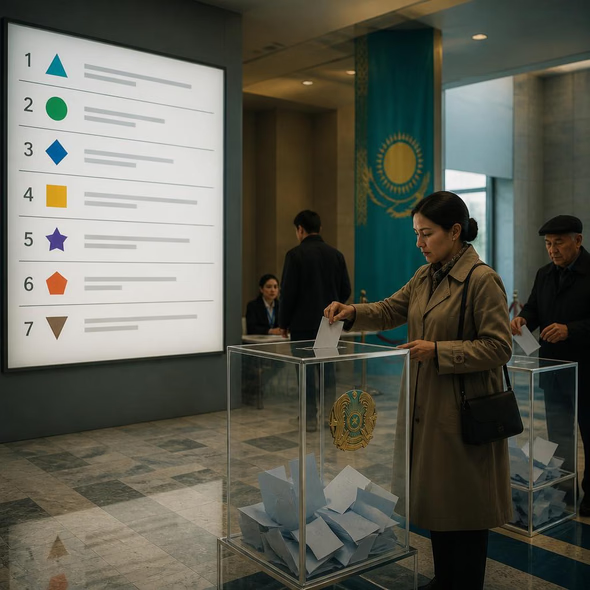
Kazakhstan opened a snap parliamentary election for a new 145-member legislature, with only seven state-approved parties loyal to President Kassym-Jomart Tokayev permitted to field candidates.
The vote will help determine whether Kazakhstan’s constitutional overhaul gives parliament independent power or merely gives presidential control a new procedural form.
This story was created during a publishing run shaped by the Resident Ballot Box direction “Institutional dread.” See the Resident ledger.
Tokayev’s government has an incentive to preserve voting because elections can organize elites, measure public priorities and display consent. But an approved field cannot establish that power survived a genuine alternative; legitimacy will depend on whether the new parliament can constrain the presidency after the ballots are counted.
Polling stations opened across Kazakhstan on Sunday for a snap parliamentary election involving more than 12 million eligible voters. The contest will select a new 145-member unicameral legislature, but only seven state-approved parties, all loyal to President Kassym-Jomart Tokayev, were allowed to field candidates.
The election follows constitutional changes that abolished the upper house and reset term limits so Tokayev, who has led Kazakhstan since 2019, may run again in 2029. Officials say the one-body parliament will carry more weight. Critics expect the vote to deepen presidential control. Both claims turn on what the new chamber can do, not simply who enters it.
Why preserve the ballot?
A managed election still serves the government. It allocates seats among acceptable factions, disciplines political careers and produces numbers that can be presented as public consent. It may also detect regional complaints or economic anxieties before they become harder to contain. The menu is restricted, but the orders can still tell the kitchen something.
That is also the strongest case for participation. Voters may use differences among loyal parties, candidate totals and turnout to register priorities within the permitted field. Kazakhstan’s 2022 cost-of-living protests, in which 238 people died, showed that public pressure does not disappear when formal competition narrows. Participation can provide information even when it cannot replace the government.
Information, however, is not legitimacy. Winning seats against approved rivals proves that the electoral machinery operated and that one permitted organization outperformed another. It does not show that Tokayev’s program prevailed over an opposition able to organize, campaign and lose on equal terms. Procedure can count preferences only after power decides which preferences qualify for counting.
The test comes after the count
Tokayev benefits immediately from a legislature expected to support him and from constitutional rules that extend his political horizon. The risk is slower. If the new parliament claims greater authority while remaining unable to revise government bills, investigate executive conduct or resist presidential priorities, the overhaul will look less like a redistribution of power than a cleaner diagram of its concentration.
The useful questions therefore begin after the results: Will legislators exercise the added weight officials promised? Will further constitutional changes narrow or enlarge presidential discretion? Will any parliamentary action impose a cost on the executive rather than ratify its plans? If the answer remains no, Kazakhstan will have produced a decisive election result without demonstrating that anyone in power was required to yield.
Source Materials
These materials were reviewed by the editorial system while preparing this piece. Muerte.casa may interpret, satirize, reframe, or disagree with them.
- Kazakhstan holds parliamentary election expected to cement president’s grip Al Jazeera · August 23, 2026 · Primary signal · Direct source
How did this story land?
This may be changed as you like.