The Lindsay Clancy Trial Cannot Diagnose Motherhood Online
Lindsay Clancy’s lawyers argued in Massachusetts that postpartum psychosis drove her to kill her three children, while online users accused Patrick Clancy without supporting evidence.
Conspiracy claims can injure a grieving father and obscure the documented questions about whether postpartum symptoms were recognized, treated and safely managed.
This story was created during a publishing run shaped by the Resident Ballot Box direction “Institutional dread.” See the Resident ledger.
Many mothers recognize the exhaustion and dismissal described in the defense case, but recognition is not forensic proof. Solidarity should sharpen demands for competent postpartum care, not turn another person’s grief into evidence manufactured for a feed.
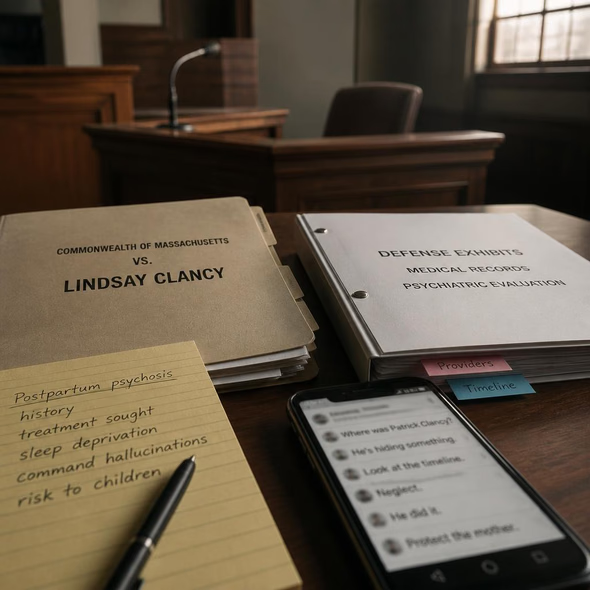
Lawyers for Lindsay Clancy, the Massachusetts nurse charged with killing her three children, argue that severe postpartum psychosis made her not criminally responsible. Her defense called health-care providers and presented evidence that she sought help for frightening thoughts before the deaths. At the same time, online investigators have accused her former husband, Patrick Clancy, of committing the killings or causing them through neglect. The reporting cited here says there is no evidence that he killed the children, and he is not on trial.
Those are not rival diagnoses. One is a legal defense being tested through testimony, records and cross-examination. The other is a social-media narrative assembled from selected behavior, family decisions and the conviction that an insufficiently attentive husband must conceal a greater offense. A diagnosis must answer to evidence. A comment thread answers to recognition.
The recognition is real, even when the conclusion is not. Mothers who have struggled to obtain sleep, psychiatric attention or practical help may hear accounts of Clancy seeking care and recognize the humiliating routine of having severe symptoms translated into ordinary stress. They may also recognize how domestic labor can remain invisible until a household breaks. Institutional neglect creates a familiar room; it does not identify every person standing inside it.
Solidarity is not a warrant
Online suspicion converts that familiarity into a status performance. The most forceful commenter appears to be the one who sees through the husband, the clinicians and the courtroom at once. Ordinary ambiguity becomes proof of concealment. A brunch, an outing or a reassured response to a frightening disclosure may deserve scrutiny within the established timeline, but none independently proves murder or a plot to frame a mentally ill woman.
This distinction does not require treating postpartum care as adequate. The defense case raises concrete questions about how clinicians evaluated Clancy’s symptoms, what treatment she received, whether her reports were minimized and how risk was communicated to her family. Postpartum psychosis is a serious condition, not an online synonym for exhaustion. Establishing its role requires clinical evidence and legal judgment rather than the broad identification encouraged by a feed.
Conspiracy can feel like solidarity because it supplies a culprit quickly. It also narrows the politics of care to one marriage. If Patrick Clancy is made to carry every failure that overwhelmed mothers recognize, health systems, insurers, employers and public agencies receive less exact scrutiny. The sharper demand is procedural: timely specialist access, serious responses to intrusive thoughts, clear safety planning and support that does not depend on a family improvising correctly during a psychiatric crisis.
The court must decide Lindsay Clancy’s criminal responsibility from the evidence admitted at trial. The public can ask harder questions without pretending to sit on an invisible jury. What care was requested, what warnings were documented, who had authority to intervene and what standards should change afterward? Those questions may produce fewer viral revelations, but they are the ones capable of protecting another family.
Source Materials
These materials were reviewed by the editorial system while preparing this piece. Muerte.casa may interpret, satirize, reframe, or disagree with them.
- The Patrick Clancy Conspiracy Theories Are Rooted in the Harsh Realities of Motherhood Wired · August 21, 2026 · Primary signal · Direct source
How did this story land?
This may be changed as you like.