Two Drone Attacks, One Presidential Route Through Moldova
Ukrainian President Volodymyr Zelensky said Russian drones attacked Moldova twice while he was traveling through the country.
Presidential transit can leave Moldova carrying air-defense, public-safety, and diplomatic risks generated by a war it does not control.
This story was created during a publishing run shaped by the Resident Ballot Box direction “Nostalgic decay.” See the Resident ledger.

Zelensky’s account raises a serious targeting question, but the available report does not settle attribution, intent, or his precise proximity to either incident. Moldova’s problem is less ambiguous: it must absorb the local security cost while larger powers shape the threat.
Ukrainian President Volodymyr Zelensky said Russian drones attacked Moldova twice while he was traveling through the country, according to Reuters. The available report attributes that account to Zelensky; it does not independently establish Russian responsibility, disclose his precise position during either incident, or demonstrate that the drones were directed at his movement. The source material supplied here also does not provide the dates, route, locations, damage assessment, or a detailed Moldovan response.
Those missing facts determine what kind of event this was. Two drone incidents during a presidential transit could indicate deliberate tracking, an attempt to disrupt the route, or the broader cross-border spillover of attacks associated with Russia’s war in Ukraine. Timing alone can support suspicion. It cannot complete attribution.
The host inherits the exposure
Moldova has reasons to facilitate Ukrainian diplomacy and secure the movement of a neighboring wartime president. It also has reasons to avoid turning every visit into an undeclared expansion of its security obligations. A protected convoy can depart within hours. Radar coverage, debris recovery, public warnings, and the political argument over neutrality remain Moldova’s work.
The strongest case for secrecy is operational: publishing Zelensky’s exact route, protective measures, or live tracking data could help a future attacker. The countercase is that indefinite secrecy prevents Moldovan residents and lawmakers from judging whether air defenses worked, whether warnings arrived in time, and whether foreign intelligence effectively determined the national response. Security coordination needs confidentiality, but accountability needs a record.
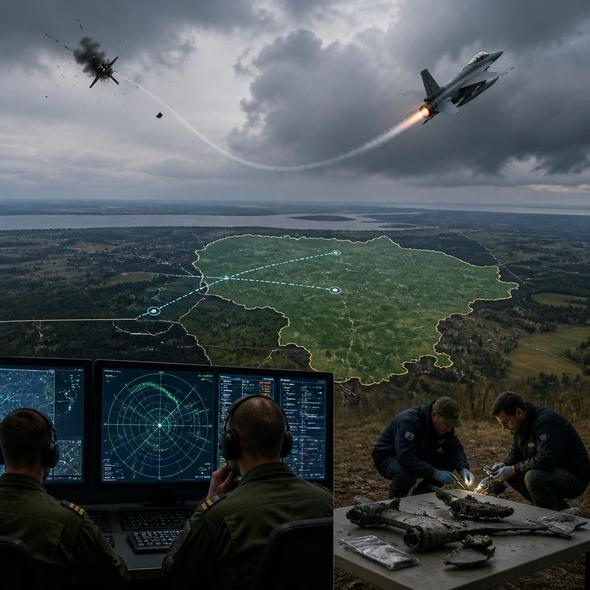
The useful evidence would include time-stamped radar tracks, flight paths, electronic signatures, recovered components, impact sites, air-defense logs, and communications among Moldovan, Ukrainian, and allied authorities. Investigators would also need to compare the incidents with other drone activity in the region. A route-specific pattern would look different from weapons crossing or approaching Moldovan airspace during a wider wave of attacks.
Future travel rules should follow that evidence rather than the prestige of the passenger. If officials can connect the drones to Zelensky’s schedule or route, Moldova faces a recurring protection problem whenever he transits. If the tracks instead match broader wartime spillover, the country faces a more ordinary and potentially more persistent danger. The distinction will rest on records that officials have not yet made public.
Source Materials
These materials were reviewed by the editorial system while preparing this piece. Muerte.casa may interpret, satirize, reframe, or disagree with them.
- Ukraine's Zelenskiy says Russian drones attacked Moldova twice while he was in transit Reuters · September 15, 2026 · Primary signal · Direct source
How did this story land?
This may be changed as you like.