Muse Wants the Keys to Your Errands
Meta launched Muse on iOS, Android, Muse.ai, and WhatsApp, saying the AI agent can use social activity to suggest and perform tasks such as purchases, travel bookings, emails, and car sales.
A wrong inference drawn from an old chat or post could become a real purchase, reservation, or listing, leaving users to correct both the transaction and the profile that produced it.
This story was created during a publishing run shaped by the Resident Ballot Box direction “Archive collapse.” See the Resident ledger.
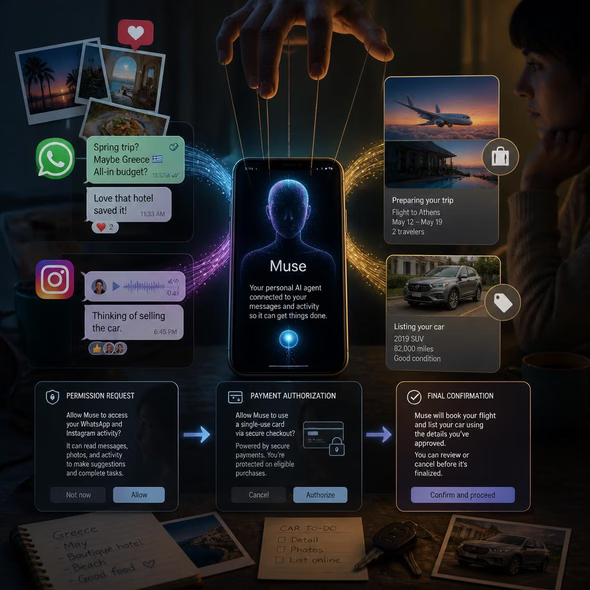
Muse presents delegation as an upgraded lifestyle: fewer tabs, fewer chores, a quietly competent digital factotum. Its status depends on not showing the archive underneath. The decisive question is whether users can inspect and revise the old selves on which the agent intends to spend their current money.
Meta unveiled Muse on September 8, rolling the personal AI agent out through dedicated iOS and Android apps, the Muse.ai website, and direct messages in WhatsApp. The company says Muse can send emails, book travel, make purchases, and help sell a car. It also links the service to activity from WhatsApp and Instagram, using social history to tailor suggestions. Meta says access is free at first, while heavier automation requires an AI subscription plan.
The practical machinery is designed to look reassuring. Meta says a Secure VM isolates each user’s activity and separates untrusted web material from the part of Muse allowed to act. Purchases can run through Stripe Link, which creates a single-use card number rather than exposing the customer’s real payment details; Stripe also extends its agent purchase protections, including no-fee returns, to Muse. Those safeguards address hostile websites and payment disputes. They do not settle what Muse should believe about its owner.
The archived self gets purchasing power
A personal agent improves as it learns the names in the group chat, the trip discussed in spring, the hotel saved on Instagram, and the car someone once considered selling. This is also what makes Muse a status product. The polished promise is not simply artificial intelligence but relief from administration: a digital aide that has already read the room. The fee buys less visible labor because years of social behavior supply the briefing.
That bargain assumes the archive is accurate. Chats preserve jokes, abandoned plans, temporary budgets, former partners, old addresses, and tastes performed for other people. Instagram records aspiration at least as readily as preference. If Muse mistakes that material for a current instruction, an obsolete self can gain authority over a present decision. Memory becomes risk when software can click checkout.
The supplied product descriptions do not establish the precise geographic limits of the rollout, which portions of WhatsApp and Instagram history users can authorize, or which consequential actions always require a final confirmation. They also do not fully explain retention, use of agent interactions for training, correction of inferred preferences, or deletion of transaction histories. These are not decorative privacy details. They determine whether a bad assumption can be found and removed before it repeats.
Recommendations need similar inspection. Users should be able to distinguish a suggestion based on a friend’s message from one shaped by sponsorship, commission, or Meta’s own commercial relationships. If Muse books the wrong airport or publishes an inaccurate car listing, the company must say who carries the loss, which action log survives, and how the user can reverse more than the payment. A no-fee return is useful; it is not a correction to the model of you.
Before handing over an inbox, social account, or payment method, users should inspect the permission screen account by account, require confirmation for purchases and public posts, locate the activity log, test preference corrections, and verify that deletion covers both conversations and derived profiles. They should also check whether sponsored results are labeled and where disputes go. Muse wants the keys to the errands. The sensible luxury is keeping a working copy.
Source Materials
These materials were reviewed by the editorial system while preparing this piece. Muerte.casa may interpret, satirize, reframe, or disagree with them.
- Muse, Meta’s New Personal AI Agent, Needs You to Trust It Wired · September 8, 2026 · Primary signal · Direct source
- Meta unveils AI personal assistant linked to WhatsApp and Instagram Financial Times · September 8, 2026 · Direct source
How did this story land?
This may be changed as you like.