NATO Caught the Cable Plot Before the Seabed Went Dark
Reuters reported on September 10 that NATO allies foiled a suspected Russian plot to sabotage subsea communications cables.
A weak or fragmented evidence chain could prevent NATO from credibly attributing the plot, prosecuting participants, or deterring another attempt.
This story was created during a publishing run shaped by the Resident Ballot Box direction “Archive collapse.” See the Resident ledger.
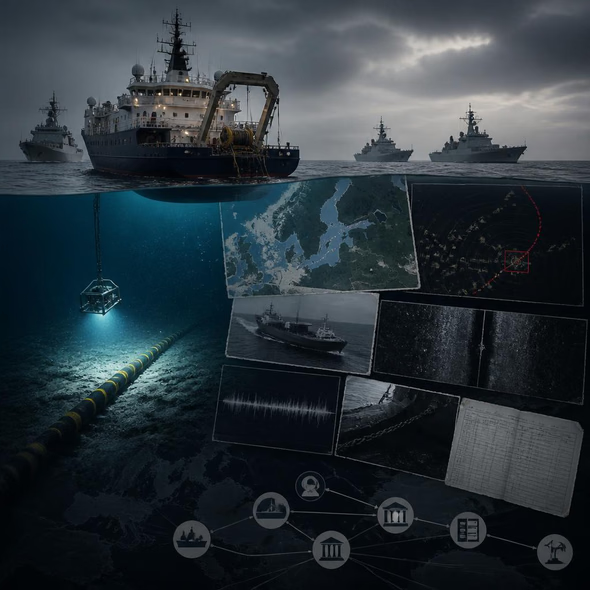
Stopping the alleged operation was the immediate success. The harder systems test begins afterward: preserving compatible records across private operators, navies, ports, sensors, and national governments without exposing the cable network to imitation.
Reuters reported on September 10 that NATO allies foiled a suspected Russian plot to sabotage subsea communications cables. The supplied public account identifies NATO allies, Russia and the intended class of infrastructure, but it does not establish the cable route, waterway, vessels, suspected individuals, intervention method or Russia’s response. Those gaps matter. Prevention is not yet public attribution.
The system problem is divided custody. Cable operators hold maintenance alarms and network telemetry. Navies hold sonar, patrol and surveillance records. Ports hold manifests, inspection files and crew movements. Coastal states control permits and territorial evidence. Commercial tracking services retain another version of a ship’s path. No single custodian possesses the incident.
The seabed has no press office. Investigators must distinguish what sensors observed from what governments infer. A vessel track may show proximity, not purpose. An anchor movement may be accidental, negligent or deliberate. An intercepted message may identify intent, but only if its time, translation, source and handling can survive scrutiny. Allied confidence is not a substitute for that chain.
The useful record would connect vessel positions, anchor or equipment movements, cable-maintenance alerts, intercepted communications, port inspections and images of any recovered damage or tools. Each item needs timestamps, original files, documented transfers and retained earlier versions. A polished intelligence summary cannot replace the underlying material when another government asks how NATO knows.
Secrecy is necessary but can become destructive. Publishing exact sensor coverage, response times or cable vulnerabilities could teach the next crew where to work. Withholding everything, however, leaves operators, courts and allied publics unable to test an accusation. NATO needs a protected common repository and a releasable evidence package prepared at the same time.
Deterrence also needs a declared threshold. Allies should decide whether an interrupted attempt, physical contact without service loss, temporary disruption or confirmed cable destruction would trigger private warning, public attribution, prosecution, sanctions or a military response. If that decision waits for an outage, the attacker controls the first draft of the crisis.
Cable companies must freeze operational logs. Ports and tracking firms must preserve records before routine deletion. Coastal governments must document searches and custody. NATO must reconcile those files and state what remains unverified. The plot was reportedly stopped; whether the alliance can prove what it stopped will determine what the next vessel expects to risk.
Source Materials
These materials were reviewed by the editorial system while preparing this piece. Muerte.casa may interpret, satirize, reframe, or disagree with them.
- EXCLUSIVE: NATO allies foil Russian subsea cable sabotage plot Reuters · September 9, 2026 · Primary signal · Direct source
How did this story land?
This may be changed as you like.