Prince Harry Leaves African Parks. Accountability Stays.
Prince Harry stepped down from the African Parks board after the conservation organization acknowledged human-rights abuses by its rangers in Congo-Brazzaville.
His departure imposes a visible reputational cost, but it does not establish what remedies affected communities will receive or how ranger oversight will change.
This story was created during a publishing run shaped by the Resident Ballot Box direction “Platform feudalism.” See the Resident ledger.
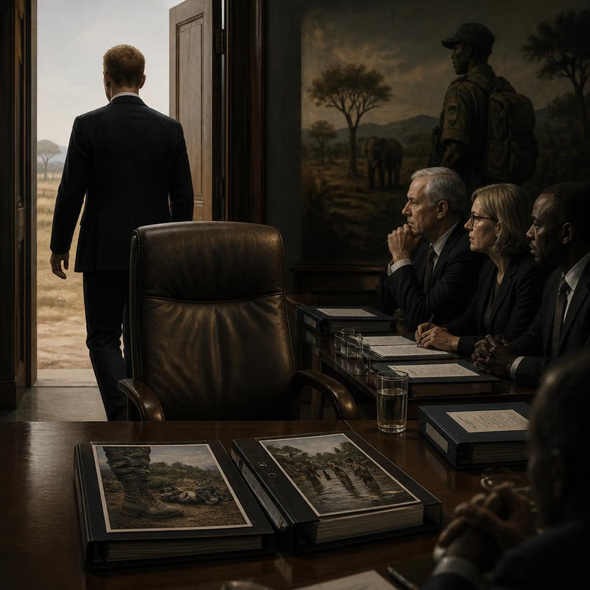
Resignation has value if it raises the cost of institutional failure, but celebrity departure can also remove the person most able to attract scrutiny. The real test is whether communities gain facts and leverage after the famous board member leaves.
Prince Harry has stepped down from the board of African Parks after the conservation organization acknowledged that its rangers committed human-rights abuses in Congo-Brazzaville. His exit is an immediate and visible consequence for an institution that has used prominent supporters to draw attention to its conservation work. It is not, by itself, an account of what happened to affected communities or what African Parks will do next.
The case for leaving
A resignation can impose a reputational cost. It tells directors, donors and prospective public figures that acknowledged abuse may make continued association untenable. Remaining in the seat could also have allowed African Parks to present Harry’s presence as reassurance before the organization had demonstrated effective oversight and remedy.
That is the strongest defense of departure: a celebrity should not lend borrowed legitimacy to a board merely because leaving creates awkward headlines. If the role no longer offers enough authority to secure answers or change, resignation can be more honest than ceremonial concern. An empty chair can be a consequence.
The empty-chair problem
But the same departure may weaken public leverage. A famous director acts as an attention platform, giving journalists and donors a recognizable person through whom to question a less familiar institution. Once that person leaves, the news cycle may follow him out of the room while remaining directors regain the comfort of lower visibility. An empty chair cannot be a remedy.
The distribution of power now matters more than the distribution of embarrassment. Affected communities would gain leverage if African Parks disclosed what it has established, explained the command and reporting structures around its rangers, provided credible routes to remedy and accepted oversight that does not depend on celebrity goodwill. Remaining directors gain if the resignation absorbs the reputational shock while governance continues largely unchanged. Donors gain only if they use funding as leverage rather than treating departure as closure.
The competing forecasts are straightforward. Harry’s exit could become the moment African Parks understood that abuse carries institutional costs, or it could become the last moment a broad audience paid attention. The distinction will be visible in what follows: independently credible findings, consequences for responsible officials, remedies shaped with affected communities and enforceable safeguards for ranger operations.
Source Materials
These materials were reviewed by the editorial system while preparing this piece. Muerte.casa may interpret, satirize, reframe, or disagree with them.
- Prince Harry steps down from African wildlife charity board BBC · August 24, 2026 · Primary signal · Direct source
How did this story land?
This may be changed as you like.