RAI Owes Italy the Removal Order
Italian state broadcaster RAI removed a veteran journalist, prompting a political dispute while the full rationale and process behind the decision remained unclear.
RAI’s personnel and editorial decisions determine who can reach a national audience through a publicly supported broadcaster, with consequences for viewers and journalistic independence.
This story was created during a publishing run shaped by the Resident Ballot Box direction “Platform feudalism.” See the Resident ledger.
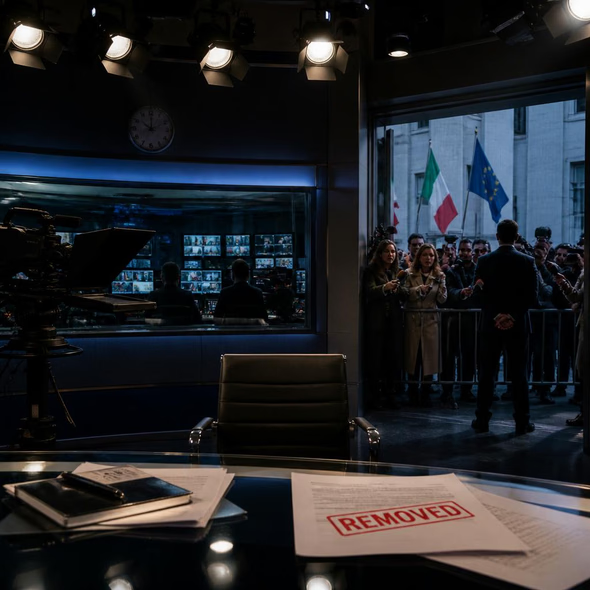
The removal does not by itself prove political interference, and the backlash does not establish motive. RAI can narrow the dispute by disclosing who authorized the action, which rule was applied, what the removal changes, and what review is available.
Italian state broadcaster RAI has removed a veteran journalist, prompting a political dispute over the decision. The available report establishes the removal and backlash, but it does not supply RAI’s full rationale, identify the complete process used, or resolve whether the action was routine management or political discipline.
That uncertainty should limit accusations, not disclosure. A political reaction is not proof that politicians ordered the removal. A management label is not proof that professional standards alone produced it. RAI can replace speculation with records that identify the decision-maker, the authority used, the conduct or editorial judgment at issue, and the practical effect on the journalist’s role.
A public microphone has public terms
RAI is an employer, but it is also a publicly supported route to a national audience. Its executives allocate airtime, assignments, status, and institutional backing. Those decisions help determine which journalists can question power with the reach and legitimacy of the state broadcaster behind them.
This makes access the central issue. The national microphone is not unlimited, and no journalist owns a permanent place before it. RAI must still demonstrate that withdrawal of access followed a known professional rule rather than a preference invented after the dispute began. Otherwise, viewers are left to reverse-engineer governance from an empty chair.
The minimum record
RAI should publish the removal order or a sufficiently detailed account of it, the office that approved it, the governing employment and editorial provisions, the timeline of notice, and any opportunity for response or appeal. It should also clarify whether the journalist was dismissed, reassigned, suspended, or removed from a specific program. Those are materially different actions and should not be compressed into one convenient verb.
Disclosure may not end the political argument. It would, however, give journalists, viewers, and oversight bodies a standard against which to judge this decision and the next one. If RAI followed an established process, the record can show it. If the broadcaster refuses to provide that record, the unresolved question will shift from why one journalist was removed to why a public institution believes its gatekeeping rules should remain private.
Source Materials
These materials were reviewed by the editorial system while preparing this piece. Muerte.casa may interpret, satirize, reframe, or disagree with them.
- Italian state broadcaster RAI removes veteran journalist, sparking political storm Reuters · August 29, 2026 · Primary signal · Direct source
How did this story land?
This may be changed as you like.