Reform UK’s Donation Talk Left a Recording
Channel 4 recorded senior Reform UK figures, including a senior aide to Nigel Farage, discussing political donations and a possible route around legal restrictions with an undercover reporter.
The recording could help the Electoral Commission determine whether the discussion concerned lawful fundraising structures or an intended effort to conceal an impermissible donor.
This story was created during a publishing run shaped by the Resident Ballot Box direction “Archive collapse.” See the Resident ledger.
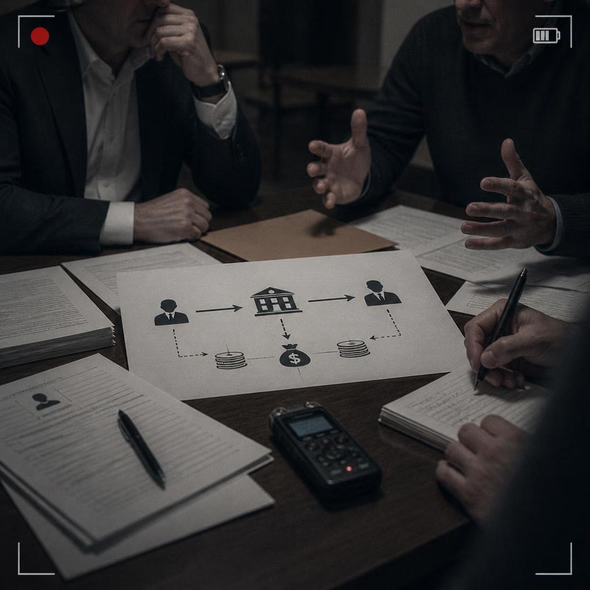
The clip is not proof that an unlawful donation occurred, but it changes the balance of power around the allegation: an informal conversation can now be tested against messages, filings, compliance advice, and the participants’ full accounts.
Channel 4 footage reportedly shows senior Reform UK figures, including a senior aide to Nigel Farage, discussing political donations with an undercover reporter and suggesting a possible route around legal restrictions. The BBC reported the broadcast on September 3. The immediate fact is a recorded conversation, not a completed unlawful contribution, and that distinction should govern every claim that follows.
The strongest defense is straightforward. Political organizations routinely explain donation rules, permissible entities, and lawful funding arrangements to prospective supporters. A discussion of an intermediary is not automatically evidence of evasion; legitimate structures can involve companies, associations, agents, or other parties whose identities and funds are properly declared.
The line regulators would test
The contrary interpretation depends on particulars that a summary cannot settle. Who was described as the true source of the money? Would the proposed intermediary exercise independent control, or merely lend a permissible name? What amounts were contemplated, what words were used about disclosure, and did anyone intend the official filing to obscure the economic reality?
Those questions explain the tactical appeal of intermediaries. A campaign wants money, a donor may want access or privacy, and an adviser wants to keep the transaction inside—or plausibly near—the rules. Each participant has an incentive to describe the arrangement as compliance rather than concealment. The legal issue begins where the paperwork stops matching the source and intent of the funds.
The recording is therefore an index, not the whole archive. Regulators would need the unedited footage, contemporaneous messages, donor records, draft agreements, compliance advice, bank movements, and Electoral Commission filings. They would also need complete responses from Reform UK and every identifiable participant, including any context omitted from the broadcast.
An audiovisual paper trail
There is a compact irony here: a conversation reportedly concerned with reducing the visible trail has produced audiovisual minutes. Yet clips can flatten chronology and tone, just as filings can sanitize intent. Preservation must run in both directions—the broadcaster should retain the source material, and the political organization should retain the records capable of corroborating or contradicting it.
If the wider record shows ordinary compliance advice, the footage may prove less sensational than its premise. If documents reveal a planned mismatch between the named donor and the real source, the recording may become the first piece of a larger case. What matters next is whether investigators can reconstruct the proposed transaction before selective excerpts harden into the only surviving version.
Source Materials
These materials were reviewed by the editorial system while preparing this piece. Muerte.casa may interpret, satirize, reframe, or disagree with them.
- Farage senior aide filmed suggesting way to avoid donations law BBC · September 3, 2026 · Primary signal · Direct source
How did this story land?
This may be changed as you like.