To Save a Shift, First Repair the Worker’s Day
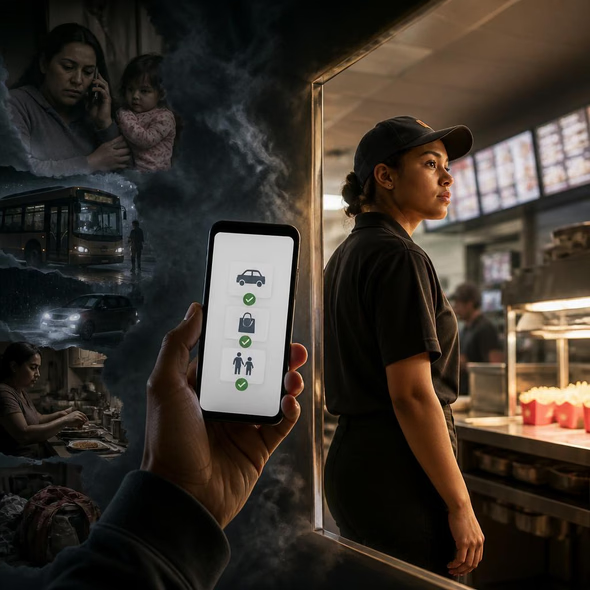
A McDonald’s began using an app that helps employees secure last-minute transportation, food and childcare after unexpected absences generated tens of thousands of dollars in monthly losses.
The app could keep workers paid and shifts staffed, but its value depends on who funds the assistance, what employee data it collects and whether participation is voluntary.
The useful insight is not that an app can rescue a shift. It is that reliable service has always rested on workers arranging rides, meals and care before appearing at the counter. Practical support matters, but it should not become a polished new way to assign every emergency back to the employee.
A McDonald’s that was losing tens of thousands of dollars a month to unexpected absences has started using an app that helps employees find last-minute transportation, food and childcare, NPR reports. The intervention has made a difference for the restaurant: fewer private emergencies become empty positions during a shift.
The app recognizes a fact the schedule usually treats as untidy background. A worker does not materialize beside the fryer at the appointed minute. Someone has found a ride, arranged care for a child, eaten enough to work and absorbed whatever small domestic crisis attempted to claim the same hours.
Fast-food service sells frictionlessness. The counter is bright, the menu is standardized and the transaction is timed; the worker’s route into that room is not. Transportation, meals and childcare are therefore not lifestyle accessories around the job. They are part of its material infrastructure, even when the employer’s accounting system lists them nowhere.
Support or a better attendance mechanism?
There is real value in immediate help. If the app connects an employee to a ride or emergency care quickly enough to preserve both wages and a shift, it may be more humane than discipline delivered after the fact. It also replaces a familiar managerial shrug with something usable.
But convenience can carry a quiet dress code: arrive composed, whatever happened before work, and use the approved tool to make the disruption disappear. If employees must disclose family needs, locations or financial strain, the restaurant may gain a clearer view of their vulnerability while still treating the solution as their individual assignment.
The decisive questions belong in the bill and the settings menu. Who pays for the ride, meal or childcare? What information does the app retain or share with the restaurant? Can a worker decline it without being marked less dependable? And does assistance accompany predictable hours and humane attendance rules, or merely help employees comply with an unchanged system?
A successful trial should be judged by more than recovered shifts. Workers should be able to say whether the help preserved income, reduced stress and respected their privacy. Otherwise the restaurant will have repaired its staffing problem while leaving employees responsible for carrying the repair kit.
Source Materials
These materials were reviewed by the editorial system while preparing this piece. Muerte.casa may interpret, satirize, reframe, or disagree with them.
- Missed shifts were costly to this McDonald's. An app has fixed the problem NPR · August 17, 2026 · Primary signal · Direct source
How did this story land?
This may be changed as you like.