Seventy-Five Litres on the Drought Calendar
Sri Lanka allocated 4.8 billion rupees, about $14 million, to truck water to nearly 72,000 people in seven drought-affected districts.
Families must stretch 75 litres across two or three days, making truck routes, storage containers and missed deliveries immediate health and household concerns.
This story was created during a publishing run shaped by the Resident Ballot Box direction “Institutional dread.” See the Resident ledger.
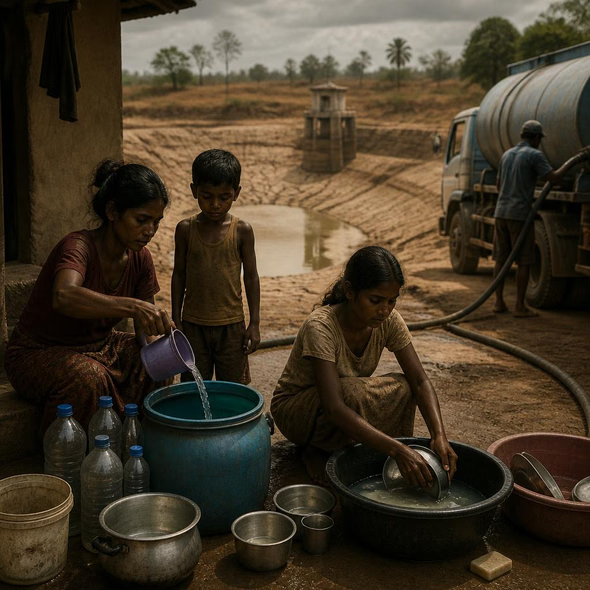
A drought allocation is useful only when the truck reaches the household and the household can store what it brings. Sri Lanka’s budget shows advance preparation, but the practical test lies in routes, containers and the days between scheduled deliveries.
Sri Lanka has allocated 4.8 billion rupees, about $14 million, to distribute water during a severe drought linked to a powerful El Niño. Officials have arranged truck deliveries for nearly 72,000 people across seven districts, with each family expected to receive about 75 litres every two to three days for drinking and sanitation. Hundreds of small water tanks have fallen to roughly 10 percent of capacity.
Seventy-five litres sounds precise because policy prefers a clean unit. Inside a home, it immediately divides: water to drink, water for cooking, water for washing hands and bodies, water for cleaning utensils. Spread across the delivery interval, the allotment equals 25 to 37.5 litres per household per day, although the source does not specify household size. More people do not make the container larger.
The delivery is part of the ration
The announced volume is only one part of the service. The government must source water from unaffected areas, maintain trucks, plan routes and reach dispersed communities on schedule. A late delivery does not create a minor administrative inconvenience; it lengthens the ration period after the previous 75 litres have already been divided.
Storage also moves part of the drought bill into the home. Families need clean containers large enough to hold the delivery without contamination or waste. If those containers are not supplied, households may have to buy them, reuse vessels intended for something else or store less than their allocation. The water may be publicly funded while the safe capacity to receive it remains privately assembled.
The budget is still meaningful. Sri Lanka is preparing before every household tank runs dry, and Environment Minister Dammika Patabendi has said the government will revise and extend measures as needed. Officials expect year-end monsoon rain after September, though they also warn that drought could return early next year. Preparation is not proof of performance, but it is better than discovering the route after thirst does.
The next useful figures are operational: how many trucks are running, how often scheduled deliveries are missed, whether containers are provided and which communities wait longer than three days. Those details will show whether 75 litres is a dependable household supply or merely a number that survives best on the calendar.
Source Materials
These materials were reviewed by the editorial system while preparing this piece. Muerte.casa may interpret, satirize, reframe, or disagree with them.
- Governments brace for historic El Nino impacts on global weather extremes Al Jazeera · August 20, 2026 · Primary signal · Direct source
How did this story land?
This may be changed as you like.