Shein Lists at One-Quarter of Its Dream
Fast-fashion retailer Shein is pursuing a Hong Kong listing at roughly one-quarter of the $100 billion valuation it once sought after years of failed attempts.
The reduced valuation will test whether public investors consider Shein’s vast reach and rapid trend cycle durable enough to justify its growth story.
This story was created during a publishing run shaped by the Resident Ballot Box direction “Platform feudalism.” See the Resident ledger.
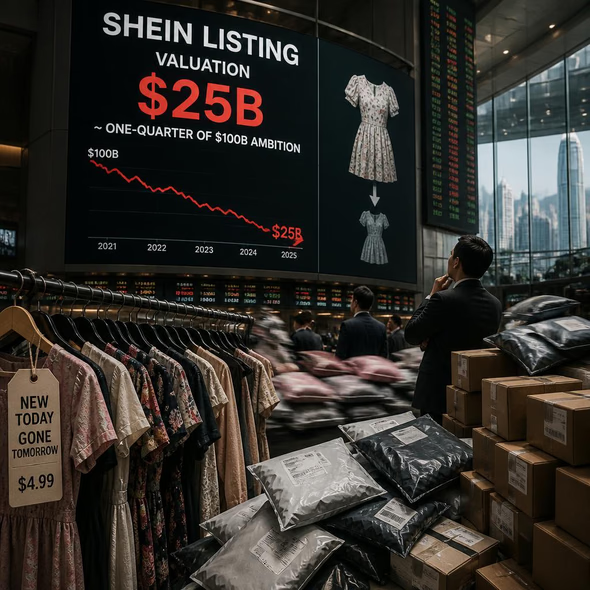
Shein taught shoppers to treat novelty as an endlessly refreshed utility, but its reduced valuation reveals a different dress code for public markets. Cultural ubiquity can attract attention; investors still want evidence that the platform can turn that attention into durable value.
Shein is pursuing a Hong Kong listing at roughly one-quarter of the $100 billion valuation it once sought, according to the Financial Times, after years of failed attempts to reach the public market. The fast-fashion retailer remains culturally prominent. Its corporate ambition now carries a substantial markdown.
That cut matters because Shein sells more than inexpensive clothing. Its platform presents fashion as a constantly refreshing field of choices, where a shopper can encounter a new silhouette, copy a passing mood and replace it again with little ceremony. Speed is not merely an operating method. It is the style.
The public fitting
A listing asks investors to evaluate that style without the flattering light of private-market aspiration. Attention, trend velocity and platform reach can produce formidable scale, but public investors must decide whether those qualities form a durable business rather than a spectacular habit. Ubiquity is evidence of influence. It is not, by itself, a valuation method.
The status code beneath ultra-fast fashion has always been double. The shopper gains access to visible novelty without the old admission price of luxury, while the platform controls the tempo at which an outfit begins to look current and then exhausted. Low prices widen participation. The accelerated cycle quietly makes repetition feel like failure.
Shein’s reduced valuation applies that same tempo to the company. What once appeared irresistibly current must now be priced for a less enchanted audience. This is not proof that the business has ceased to matter, nor a tidy verdict on every criticism attached to fast fashion. It is a material test of whether reach can survive scrutiny once scale stops reading as glamour.
The next evidence will come from the listing itself: the value investors accept, the performance they demand and the story Shein tells when endless novelty must be translated into durable returns. The dresses can keep changing by the hour. The market will be watching whether the underlying proposition holds its shape.
Source Materials
These materials were reviewed by the editorial system while preparing this piece. Muerte.casa may interpret, satirize, reframe, or disagree with them.
- How Shein’s $100bn dream unravelled Financial Times · August 24, 2026 · Primary signal · Direct source
How did this story land?
This may be changed as you like.