“Stud or Dud” Monetizes the First Date
PeopleFinders launched Stud or Dud in the US, letting users search a potential date by name or phone number and receive a report assembled from public and publicly available data.
Daters may use potentially incomplete or decontextualized records to make decisions about safety, trust, and intimacy without the searched person knowing or having a clear chance to respond.
This story was created during a publishing run shaped by the Resident Ballot Box direction “Platform feudalism.” See the Resident ledger.
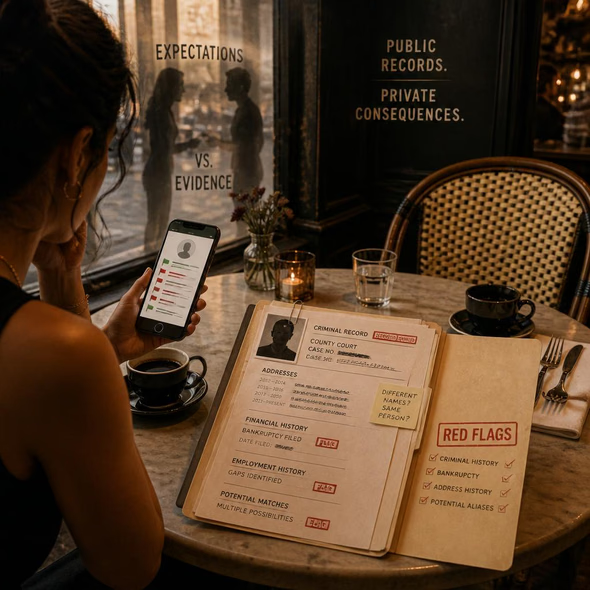
Stud or Dud turns vigilance into a purchasable dating credential: one person arrives carrying the platform’s account, while the other enters the room already classified. Safety can justify research, but it does not make an opaque dossier accurate, consensual, or fit to deliver a verdict.
PeopleFinders launched Stud or Dud in the United States as a background-check site for dating. A user enters a potential date’s name or phone number, and the service assembles public records and other publicly available information into categories covering finances, property, employment, and criminal history. An AI-generated overview then identifies what the product considers red and green flags.
The practical appeal is not mysterious. People meeting through apps, direct messages, and social media often lack shared friends or institutions that once supplied informal references. A courthouse record or sex-offender listing can carry information relevant to safety, and telling daters to ignore every available warning would merely dress vulnerability as romance.
But Stud or Dud does more than retrieve records. It creates a social code in which the prepared dater buys prior knowledge and the searched person silently auditions against it. One person arrives with a dossier; the other may not know there is an allegation, an old address, a bankruptcy, or a stranger with the same name sitting between the coffee cups.
The dossier sets the dress code
Public does not mean self-explanatory. A filing can be accurate yet misleading without its date, outcome, jurisdiction, or surrounding circumstances. Aggregation strips records from the offices and timelines that gave them meaning, then places them in a polished report whose neatness can look like certainty. The AI summary adds another layer of confidence without adding firsthand knowledge of the person.
The red-flag label is especially consequential because it converts information into etiquette. PeopleFinders CEO Amber Higgins says users can decide whether a flagged item matters to their own expectations, but the platform has already selected the categories, arranged the evidence, and supplied the color. The customer receives the privilege of nuance after the searched person has absorbed the stigma.
Anyone using such a report should ask ordinary, unglamorous questions before treating it as a verdict: Does the name, age, and location identify the right person? How recent is the record? Was a charge dismissed, a debt resolved, or an address shared with somebody else? Can the underlying document be checked directly? Is the concern serious enough to change the meeting plan, or appropriate to raise in conversation?
A background check can inform a safety decision without becoming a theory of someone’s character. Meet in public, tell a friend where you are going, keep control of transportation, and leave when conduct feels unsafe; those protections respond to the person in the room. The remaining question for Stud or Dud is whether it helps users verify risk or simply sells the elegance of feeling pre-cleared.
Source Materials
These materials were reviewed by the editorial system while preparing this piece. Muerte.casa may interpret, satirize, reframe, or disagree with them.
- PeopleFinders’ New Website Runs Background Checks on Your Dates Wired · August 26, 2026 · Primary signal · Direct source
How did this story land?
This may be changed as you like.