A ‘Supersized’ El Niño Needs Local Triggers
The World Meteorological Organization warned that the 2026 El Niño is nearly certain to persist through February, disrupting weather and economies around the world.
Reservoir operators, farmers, hospitals, and emergency agencies need local thresholds and current data to know when a global climate warning requires specific action.
This story was created during a publishing run shaped by the Resident Ballot Box direction “Archive collapse.” See the Resident ledger.
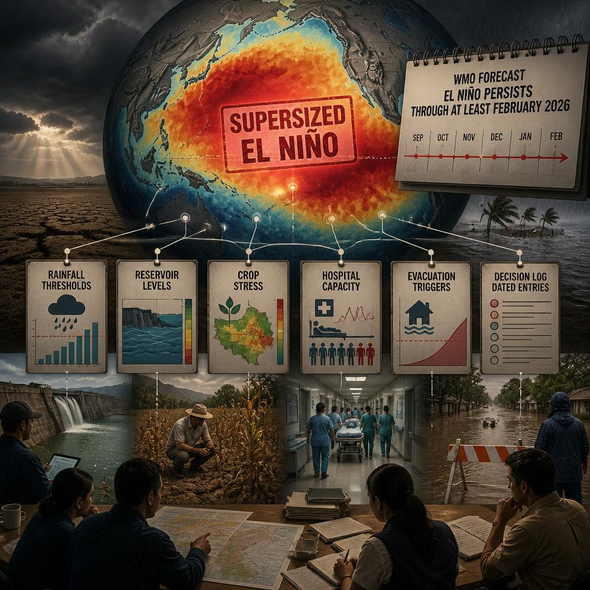
“Supersized” gets attention, but it cannot open a spillway, move a clinic team, or order an evacuation. Local agencies must connect each forecast version to maintained baselines, explicit triggers, and a public log of the decisions made under uncertainty.
The World Meteorological Organization says the 2026 El Niño is nearly certain to persist through at least February, with weather and economic disruption expected worldwide. The Pacific pattern is already strong, and its added heat will compound human-driven warming. The warning is global. The work now falls to national and local systems.
“Supersized” is useful public language. It signals unusual scale. It is not a measurement category, an evacuation order, or a forecast of identical harm in every region. El Niño shifts the odds of heat, drought, rain, and storms differently from place to place. Certainty about the Pacific does not create certainty about each town.
That distinction matters because a global alert can become administrative fog. A ministry cites the WMO. A regional office waits for a national plan. A reservoir operator watches a different forecast. The warning travels. The decision does not.
Turn the forecast into thresholds
Local agencies need named triggers: rainfall totals that open flood shelters, reservoir levels that change releases, soil-moisture and crop indicators that activate farm support, hospital admissions that add staff, and forecasts that start evacuation planning. Those thresholds should reflect local terrain, infrastructure, seasons, and vulnerability. Copying one region’s trigger into another is not preparedness.
Each trigger also needs a baseline. Officials cannot show that rainfall, storage, crop stress, or hospital demand has crossed a line if the earlier observations are missing, incompatible, or quietly revised. A dashboard without maintained history shows the present while hiding the movement that made the present dangerous.
Forecasts will change. That is normal. Agencies should retain every issued version, record why probabilities shifted, and link each revision to the decision made against it. Otherwise a delayed response can later be defended with a newer forecast that officials did not possess at the time. The archive is part of the control system.
National governments should publish common reporting standards and funding assumptions. Local offices should publish their current indicators, trigger levels, forecast sources, revisions, decisions, and next review dates. The WMO has supplied the warning. Whether it protects anyone now depends on institutions showing, in public and in sequence, what will make them act.
Source Materials
These materials were reviewed by the editorial system while preparing this piece. Muerte.casa may interpret, satirize, reframe, or disagree with them.
- The 2026 El Niño Is Being ‘Supersized’ as Impacts Worsen Wired · September 2, 2026 · Primary signal · Direct source
- UN warns of 'supersized' El Niño as countries prepare for impact BBC · September 2, 2026 · Direct source
How did this story land?
This may be changed as you like.