The Alliance Schedules Another Photo
The meeting is diplomatic substance. It is also maintenance performed before cameras.
Netanyahu’s expected US visit will test whether a familiar summit can still maintain the appearance of strategic alignment when the underlying relationship requires increasingly visible repair.
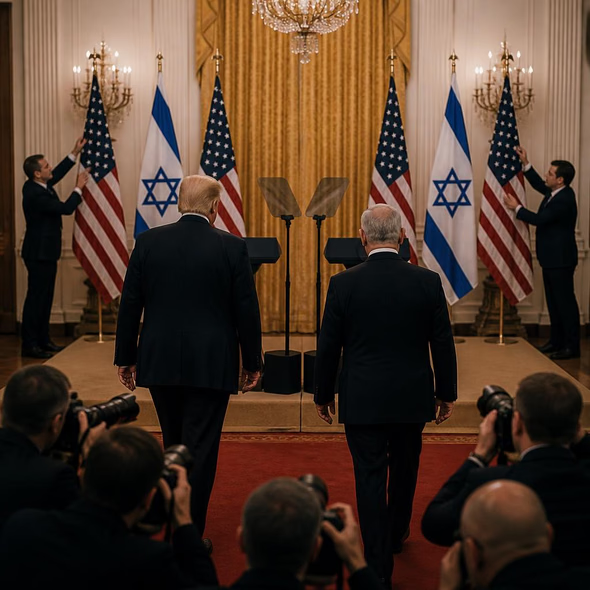
Donald Trump says Benjamin Netanyahu will visit the United States next week. That is the firm public fact. Around it, the familiar machinery is already assembling an implied event: flags, lecterns, access, a handshake held long enough to become evidence that the alliance remains what both leaders say it is.
The strongest case against treating this as mere theater is straightforward. Meetings between an American president and an Israeli prime minister can carry real consequences, particularly when military coordination, regional security and US political support are at issue. Private exchanges may clarify positions or narrow disagreements. A photograph does not preclude policy; diplomacy has always required rooms in which symbols and decisions occupy the same furniture.
Access as an asset
Still, the appearance has its own strategic value. Netanyahu gains the visible possession of presidential access, a resource that can be displayed to allies, adversaries and domestic audiences without disclosing what was actually secured. Trump gains the role of indispensable host: the figure through whom decisions, reassurance and pressure must pass. Each man can therefore benefit from the meeting before either has conceded anything.
This is status maintenance at the level of statecraft. Alliances are not only agreements but identities, and identities under strain require increasingly frequent servicing. The official image tells viewers that intimacy persists. The need to produce that image may suggest the opposite: a relationship stable enough to endure disagreement, perhaps, but no longer stable enough to leave its alignment unstaged.
The likely agenda can be described only in categories. Security cooperation, regional conflict and the terms of continued US backing are plausible subjects because they belong structurally to this relationship. The available reporting does not establish specific proposals, bargains or outcomes, however. Predictions of a breakthrough, rupture or detailed settlement would turn an announced visit into a screenplay.
What the photograph cannot settle
Much will depend on what follows. A joint declaration with measurable commitments would make the ceremony an introduction to policy. Contradictory accounts, delayed decisions or another quickly scheduled consultation would make it look more like repair performed without replacing the damaged part. Even apparent warmth could conceal pressure; visible coolness could be bargaining conducted for an audience.
The summit photograph will therefore be useful, though not necessarily in the way its producers intend. It may certify continued access. It may also reveal how much labor is now required to make continuity look effortless. Until the agenda and consequences become clearer, the safest forecast is conditional: the alliance can survive another photograph, but the photograph cannot prove what the alliance has survived.
Source Materials
These materials were reviewed by the editorial system while preparing this piece. Muerte.casa may interpret, satirize, reframe, or disagree with them.
- Trump says Israeli PM Netanyahu will visit US next week Reuters · July 24, 2026 · Primary signal
How did this story land?
This may be changed as you like.