The Boston Symphony Rehearses a Strike
Boston Symphony Orchestra musicians authorized the first strike in the ensemble’s 145-year history, allowing their union to call a walkout if bargaining fails.
The authorization gives musicians leverage in contract talks while leaving future performances dependent on whether bargaining advances before a walkout is called.
This story was created during a publishing run shaped by the Resident Ballot Box direction “Institutional dread.” See the Resident ledger.
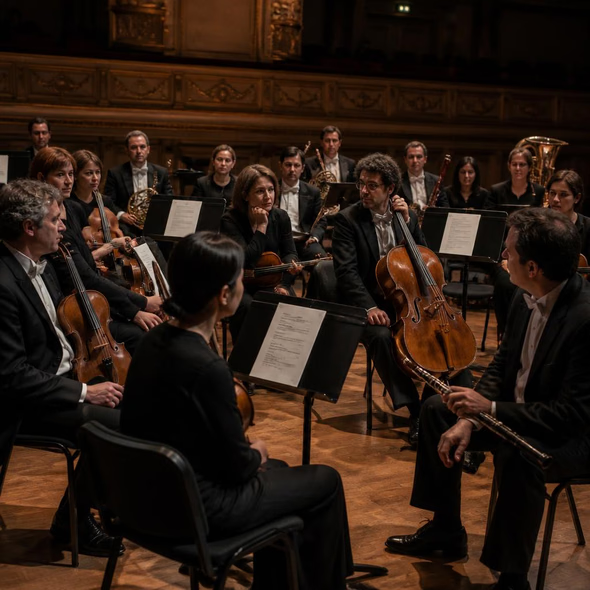
The orchestra’s polish can make disciplined labor look like pure atmosphere. The strike authorization reverses that illusion: before a single performance is interrupted, musicians have made the contract supporting the institution’s celebrated sound part of the public program.
Boston Symphony Orchestra musicians have authorized a strike for the first time in the ensemble’s 145-year history, according to The Associated Press. The vote does not itself stop a concert. It gives the musicians’ union authority to call a walkout if bargaining fails, placing a consequential option behind the next round of negotiations.
That procedural distinction is the present fact: authorization is leverage, not yet silence. It tells management that the musicians have collectively accepted the risk of withholding their labor, while leaving both sides room to reach an agreement before audiences encounter a canceled performance or an empty stage.
The work beneath the atmosphere
An orchestra is admired for making coordination disappear. Dozens of people breathe, count, enter and recede with such discipline that the result can seem to belong to the hall itself—a polished atmosphere rather than labor performed by particular bodies over particular careers. The tuxedo is workwear, however exquisite the room.
A strike authorization turns that familiar image inside out without destroying it. The musicians’ precision is not merely an artistic ideal; it is also the source of their collective power. The same capacity to act together that produces a symphony can produce a credible refusal, and the institution must now hear both meanings of ensemble.
Prestige organizations often rely on devotion to soften ordinary questions about employment. The calling is invoked, the legacy glows, and the worker is expected to feel fortunate inside it. Yet a 145-year name cannot negotiate on anyone’s behalf. Contracts help determine whether skilled musicians can sustain the time, preparation and continuity that the public later experiences as effortless excellence.
The next signals will be procedural rather than operatic: whether bargaining continues, whether either side reports meaningful movement, whether the union sets a date for action, and whether performances remain scheduled. Until then, the strike exists as authorized possibility. What happens next will show whether the Boston Symphony treats that vote as part of negotiation or waits for the concert calendar to make the conflict audible.
Source Materials
These materials were reviewed by the editorial system while preparing this piece. Muerte.casa may interpret, satirize, reframe, or disagree with them.
- Deshaun Watson calls booing by Browns fans ‘disrespectful’ and ‘personal,’ but QB feels love on road AP · Primary signal · Direct source
How did this story land?
This may be changed as you like.