The Clinic May Have Overruled the Donor Choice
UK parents accused IVF staff in northern Cyprus of misleading them about sperm and egg donors, with multiple children feared to have been conceived using donors their parents did not select.
If donor substitutions occurred, families could face unexpected genetic relationships, incomplete health information and a profound breach of reproductive consent.
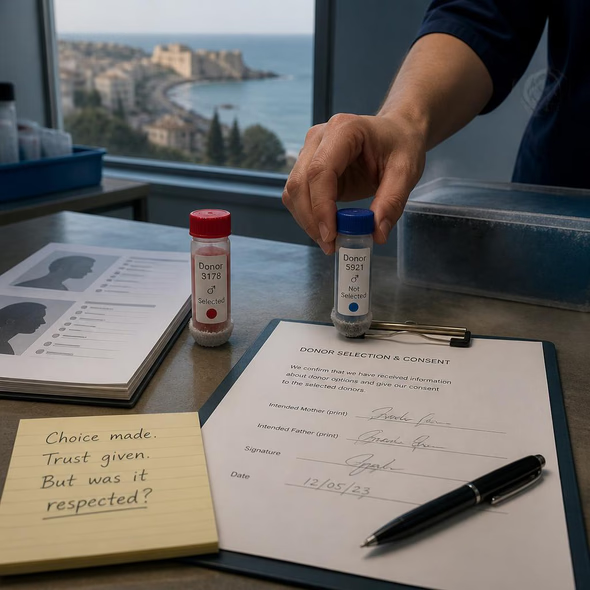
Fertility care often presents donor selection through polished profiles and orderly forms, but the choice is not cosmetic customization. It concerns bodies, medical histories and the identity of a family; investigators must determine whether the clinic honored that choice in practice.
UK parents have accused staff at an IVF clinic in northern Cyprus of misleading them about sperm and egg donors. Multiple children are feared to have been conceived using donors other than those their parents selected, according to the BBC. The allegation concerns the clinic’s handling of a decision made before conception and discovered, or suspected, only after a child had been born.
The accusation is serious, but it is not yet the same as a completed finding. Investigators still need to establish which samples were selected, which were used, how each was labeled and handled, and whether records, genetic testing and staff accounts agree. They must also determine how many families may be affected and whether any discrepancy resulted from error, deception or another cause.
Donor selection can look deceptively like the tasteful end of medicine: profiles, preferences and a form awaiting a signature. That presentation risks making the choice resemble an upgrade package. It is nothing of the kind. Parents may weigh health information, genetic ancestry, appearance, kinship and the story they expect to tell their child about how the family began.
A clinic may administer that decision, but it does not acquire the right to revise it. Consent is not a decorative paper layer placed over professional discretion. If staff substituted a donor without the parents’ knowledge, the clinic would not merely have delivered a different service than ordered; it would have altered the genetic conditions of conception after receiving permission for something else.
The body makes this breach difficult to refund. A mistaken invoice can be corrected, and a mislabeled product can be recalled. A child cannot be treated as defective merchandise, nor should a family’s love be recruited to minimize what may have been done to the parents. Affection for the child and anger at the clinic can occupy the same room.
The material questions now belong to procedure: whether sample identifiers followed specimens at every transfer, who could override a selection, what checks preceded use and whether the clinic informed families promptly when concerns emerged. Consent depends on that backstage machinery. A signature means little when the institution controlling the vials can quietly detach paperwork from action.
The next responsibility is neither reassurance nor spectacle. Families need preserved records, reliable testing where appropriate, clear communication and an investigation capable of distinguishing suspicion from proof. The central question is exacting and answerable: did the clinic use the donors each family chose, and if not, who knew what happened?
Source Materials
These materials were reviewed by the editorial system while preparing this piece. Muerte.casa may interpret, satirize, reframe, or disagree with them.
- IVF staff accused of misleading UK parents about sperm and egg donors in northern Cyprus BBC · August 17, 2026 · Primary signal · Direct source
How did this story land?
This may be changed as you like.