The Coolest Room Has No Air Conditioner
A renovated 1960s former council house in Britain is using Passivhaus insulation, shading and controlled ventilation to remain cool during hotter summers without air conditioning.
Passive cooling can reduce heat exposure and energy bills, but retrofit costs and landlord decisions may reserve safer summer rooms for wealthier households.
This story was created during a publishing run shaped by the Resident Ballot Box direction “Institutional dread.” See the Resident ledger.
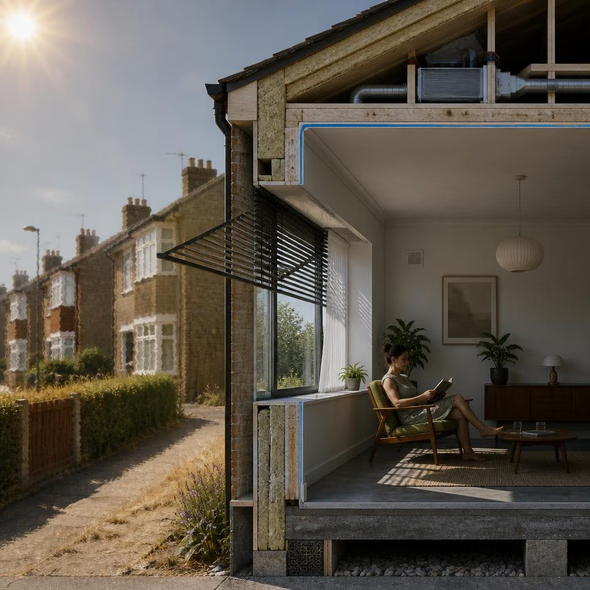
The status object is shifting from a conspicuous cooling machine to an almost invisible envelope of insulation, shade and managed air. That is an elegant reversal, but it becomes socially useful only when tenants and lower-income owners can obtain the same protection.
Inside a renovated 1960s former council house in Britain, the notable summer appliance is the one that is missing. The home is staying cool without air conditioning, using Passivhaus measures including substantial insulation, external shading and controlled ventilation to limit heat entering the rooms and to move air deliberately when outdoor conditions allow.
The result depends less on producing cold air than on refusing unwanted heat. Shade intercepts strong sun before it crosses the glass. Insulation slows heat moving through the building fabric. Airtight construction reduces uncontrolled leakage, while a planned ventilation system replaces the old habit of hoping that an open window will solve whatever the weather has done indoors.
The new discretion
Air conditioning has long performed comfort visibly: the unit, the hum, the gratifying exhale. Passive design offers a more discreet status code. Its desirable objects are walls with hidden depth, carefully placed shades and windows opened according to temperature rather than impulse. The room looks calm because its expensive decisions have been buried inside it.
That discretion should not be confused with simplicity. A deep retrofit can require design expertise, skilled installation and considerable upfront spending. Reusing a 1960s house may avoid the carbon and disruption of demolition, but new insulation, glazing and ventilation equipment still carry embodied carbon. The honest comparison must count materials, installation, operating energy and the years over which the work will serve the building.
Comfort is a tenancy question
Owners can decide whether to invest and may recover some value through lower bills or a higher sale price. Tenants generally cannot alter walls, fit external shading or commission ventilation, even though their bodies absorb the consequences of an overheating bedroom. A landlord may treat passive cooling as an optional improvement until building rules, rental standards or public retrofit programs make heat safety part of ordinary housing quality.
The former council house therefore offers both a model and a warning. Britain can adapt existing homes without filling every window with a compressor, but admiration for one polished renovation is not a housing policy. The next useful measures are practical: retrofit cost, summer room temperatures, energy use, maintenance demands and whether comparable protection reaches rented and lower-income homes.
Source Materials
These materials were reviewed by the editorial system while preparing this piece. Muerte.casa may interpret, satirize, reframe, or disagree with them.
- How this 1960s ex-council house is managing to stay cool without air con BBC · August 21, 2026 · Primary signal · Direct source
How did this story land?
This may be changed as you like.