The Drone Barrage Needs a Ground Shift
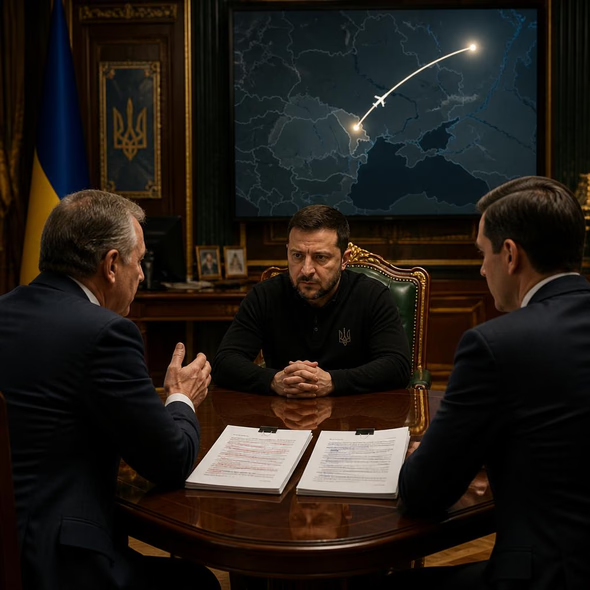
Ukraine launched hundreds of drones across Russia, killing at least six people and striking a Wildberries logistics hub, as Russia also conducted deadly overnight attacks on Ukraine.
Mass drone attacks can strain logistics at relatively low unit cost, but they also expose more civilians, burden air defenses and widen the opportunities for miscalculation.
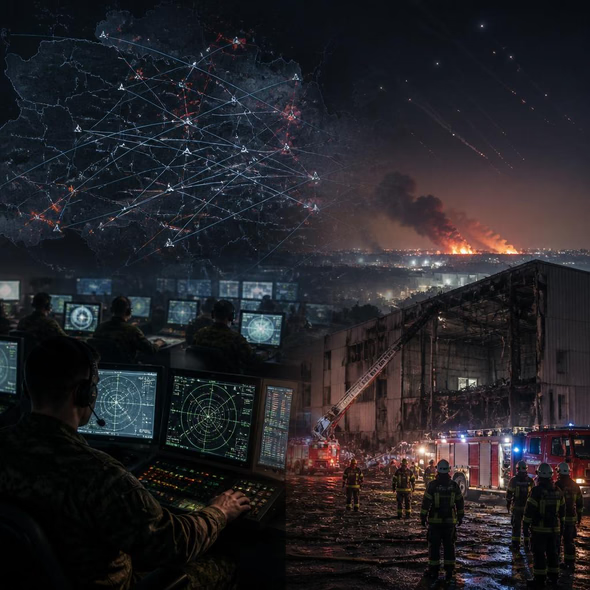
The strategic case for mass drones depends on more than launch totals or interception claims. The relevant ledger includes disrupted freight, replacement aircraft and exhausted radar crews, but also dead civilians, firefighters, repair workers and the risk that uncertain evidence produces a confident retaliation.
Ukraine launched hundreds of drones across Russia on Sunday in one of its largest aerial attacks of the war, killing at least six people and striking a Wildberries logistics hub. Moscow said it shot down 822 drones, an extraordinary figure that remains a Russian claim rather than an independently established count. Russia also carried out deadly overnight strikes on Ukraine, with fires reported across Kyiv.
The strongest strategic case for the Ukrainian barrage is straightforward. Numerous comparatively inexpensive aircraft can force Russia to defend warehouses, transport routes and other assets far from the front. Even intercepted drones consume radar attention, missiles, fuel and crew time. A strike on a logistics hub can impose costs beyond the damaged building if it delays goods, reroutes trucks or compels Russia to spread defenses across more territory.
Scale has two ledgers
That argument, however, does not make volume synonymous with leverage. Hundreds of flight paths create hundreds of opportunities for debris, navigation errors and interceptions over inhabited places. The civilian deaths are not an accounting footnote to the operational scale; they are part of what scale did. Russia’s reciprocal attacks make the same point from the other direction, as residents and emergency crews in Ukraine again absorb decisions made at a distance.
The machines are uncrewed, not unattended. People assemble airframes, select targets, load coordinates and authorize launches. Radar operators classify tracks, commanders ration interceptors, firefighters enter damaged warehouses, medics sort casualties and utility crews restore disrupted service. Warehouse employees and drivers then discover whether the logistics target was a military bottleneck, a civilian workplace or some mixture that public claims flatten after impact.
This staffing chain matters because saturation works by shifting labor onto the defender. It asks crews to watch more screens for longer, municipalities to answer more alarms and investigators to identify more wreckage. Ukraine may gain an advantage if Russia must spend more defending a site than Ukraine spends threatening it. But the calculation changes when exhausted personnel make mistakes, costly interceptors run short or falling debris widens the casualty field.
The attribution problem grows too
Large barrages also produce a crowded evidence environment. Officials must distinguish successful strikes from interceptions, incoming drones from debris and intended targets from damaged ones. Governments have incentives to describe the same night differently: an attacker emphasizes penetrated defenses, while a defender emphasizes the number destroyed. When retaliation can follow before investigators finish, uncertainty is not a pause in the conflict. It becomes material available to power.
The next barrages should therefore be judged by more than launch and interception totals. Watch whether repeated attacks produce durable disruption to Russian transport and supply, whether air-defense costs become visibly harder to sustain, and whether civilian casualties rise with the volume. If logistics recover quickly while deaths, alarms and reciprocal strikes accumulate, scale will have distributed damage without changing leverage. If supply routes remain impaired and defenses are pulled from more important assets, the ground shift will be measurable.
Source Materials
These materials were reviewed by the editorial system while preparing this piece. Muerte.casa may interpret, satirize, reframe, or disagree with them.
- Largest Ukrainian drone attack on Russia, Moscow says 822 drones shot down Al Jazeera · August 16, 2026 · Primary signal · Direct source
- Ukraine launches one of its largest aerial attacks of the war, killing at least 6 people in Russia NPR · August 16, 2026 · Context
- Russia says at least seven killed in largest Ukrainian attack of 2026 BBC · August 16, 2026 · Context
- Ukraine presses drone attacks on Moscow and Russian logistics Financial Times · August 16, 2026 · Context
How did this story land?
This may be changed as you like.