The Full-Body Scan Sells a Private Front Door
Startups including Prenuvo and Neko Health are selling full-body diagnostic scans, with Prenuvo charging from $2,500 to $4,000 for packages marketed to detect hundreds of conditions.
Ambiguous scan findings can create anxiety and additional appointments while affluent customers gain faster access to clinicians in a healthcare system where many people postpone routine care because of cost.
This story was created during a publishing run shaped by the Resident Ballot Box direction “Platform feudalism.” See the Resident ledger.
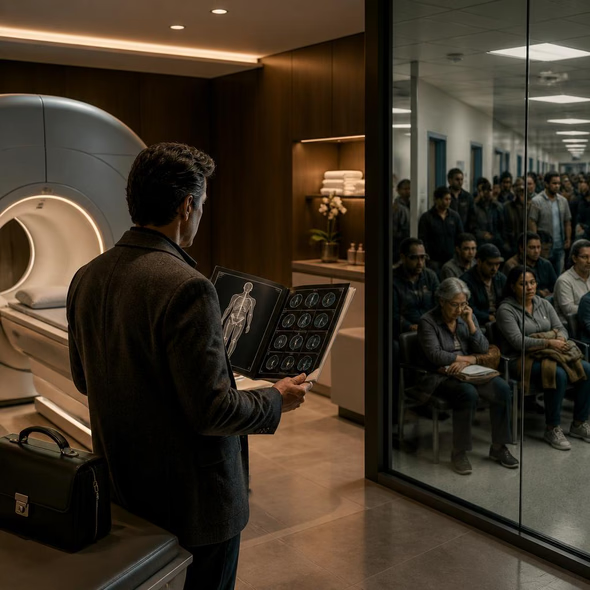
The immaculate scan suite turns vigilance into a status practice: the customer purchases not only images but time, attention, and a guided route through uncertainty. Any genuine diagnostic value must be judged alongside the follow-up capacity this premium doorway consumes.
Health startups including Prenuvo and Neko Health are selling comprehensive body scans to customers who can pay for rapid access outside ordinary primary-care routes. Prenuvo advertises a full-body scan that can detect more than 500 conditions across 33 organs, according to Futurism, and charges about $2,500 for its comprehensive service and as much as $4,000 for executive treatment. The offer is sleek and immediate: enter a private clinic, submit the body to inspection, and receive an expert account of what may be waiting inside.
That experience sits beside a much rougher American medical reality. A KFF survey cited in the report found that 36 percent of respondents skipped or postponed a doctor’s visit for financial reasons in 2025, up from 25 percent two years earlier. One patient waits because an ordinary appointment may produce an unaffordable bill; another buys a panoramic medical encounter before symptoms appear. The contrast is not simply between good and bad insurance. It is between two speeds of being taken seriously.
Vigilance as a status code
The full-body scan fits neatly into an affluent culture of calibration, where sleep, blood sugar, exercise and aging become dashboards requiring constant refinement. In that room, preventive vigilance signals discipline as well as fear. The polished folder says that no bodily detail has been neglected. Anxiety receives the flattering name of optimization, then acquires a reception desk.
A scan can produce medically meaningful images and may reveal an abnormality worth investigating. That possibility should not be dismissed merely because the service is expensive or stylish. But detecting something is not the same as proving that broad screening improves outcomes for people without symptoms. H. Gilbert Welch of Mass General Brigham warned that on-demand MRI can lead to more procedures, more worry, possible harm and greater expense. The body contains variations that look consequential before anyone knows whether they are.
This is where the luxury product returns its customer to the public problem it appeared to solve. An uncertain spot may require another image, a specialist consultation, a biopsy or months of surveillance. Those steps use clinicians, machines and appointments drawn from the same strained referral system. The scan company sells the opening scene; hospitals and patients must live through the unresolved plot. A premium entrance does not manufacture a cardiologist, oncologist or radiologist with an empty calendar.
Prenuvo and Neko Health have together attracted roughly $1.2 billion in funding, Futurism reports. That investment does not by itself establish waste, and private capital is not a fixed public-health budget. It does show which customer appears easiest to build around: one who can pay before illness, tolerate further bills and convert uncertainty into another purchase. The platform sets the terms of access, then calls the resulting tier convenience.
A responsible scan service should publish evidence for each major screening claim, distinguish established uses from speculative benefits, and state plainly how often incidental findings lead to further tests. It should disclose the full likely cost of follow-up, maintain referral capacity instead of handing customers a frightening report, and explain when a primary-care visit would be more useful. The next test is not whether the scanner can see more. It is whether the company accepts responsibility for what happens after it points.
Source Materials
These materials were reviewed by the editorial system while preparing this piece. Muerte.casa may interpret, satirize, reframe, or disagree with them.
- Bougie Health Startups Offering Full-Body Diagnostic Scans for Rich People While the Rest of Us Suffer a Crumbling Healthcare System Futurism · August 30, 2026 · Primary signal · Direct source
How did this story land?
This may be changed as you like.