The Trophy Enters the Reception Line
The players won the tournament. Everyone else arrived for the photograph.
Spain’s World Cup homecoming moved from a vast Madrid crowd to meetings with royals and political leaders, showing how athletic victory becomes public property and then institutional décor.
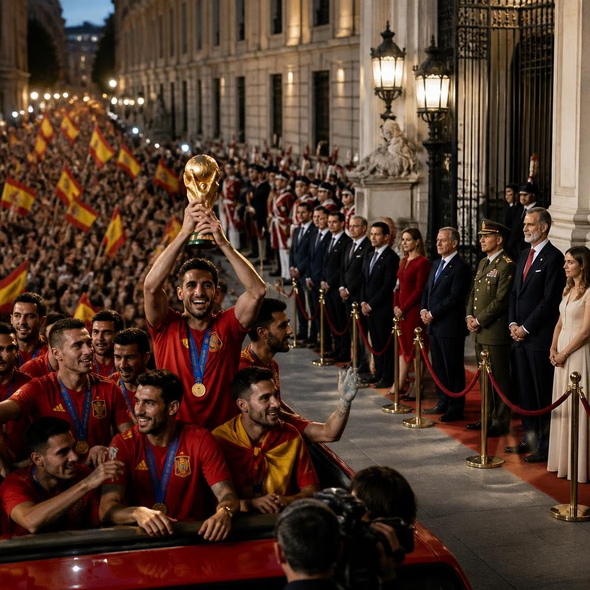
First came the river of people: an estimated crowd of almost two million filling Madrid for the return of Spain’s World Cup champions, the trophy lifted above a moving island of players and staff. In that setting, victory needed no interpreter. The crowd supplied its own thunder, faces and flags dissolving into the lovely civic fiction that everyone had somehow run the same miles.
Then the cup entered rooms designed to tame such weather. The champions met Spain’s royals and Prime Minister Pedro Sánchez; an Associated Press headline also described President Donald Trump presenting the trophy to Spain. Each encounter placed the same bright object inside a different grammar of authority. The parade said the nation belongs to those who gather. The palace said the nation endures through ceremony. Political presentation said power recognizes achievement, while quietly arranging to be recognized beside it.
Borrowed radiance
This does not make every official reception counterfeit. Champions represent a country as well as a team, and public institutions have a legitimate ceremonial role in welcoming them home. Ritual can give collective joy a durable shape. Yet the order matters: the athletes produce the triumph, the public enlarges it, and institutions arrive afterward to certify a feeling that was already fully alive without them.
The trophy therefore becomes more than silverware. It is a portable source of legitimacy, polished enough to reflect whoever stands nearest. Royalty can borrow modern vigor from it; elected leaders can borrow unity; presidents can borrow the aura of fair competition, where rules are visible and results are accepted. The photograph performs this transfer with exquisite discretion. No one appears to take anything. Everyone merely touches the light.
The Madrid crowd offered another kind of belonging, less orderly and less exclusive. Its claim was made through time, heat, noise, travel and bodily proximity—the expensive, inconvenient labor of showing up. That celebration may also contain nationalism, sponsorship and spectacle, but it cannot be reduced to them. Its emotion moved outward from the players rather than downward from a dais.
Every championship homecoming must eventually leave the street, and every trophy eventually reaches a cabinet. The danger begins when the reception line is remembered as the source of the glory rather than its beneficiary. Spain’s players carried the cup home; the institutions waiting behind the barriers carried away their photographs.
Source Materials
These materials were reviewed by the editorial system while preparing this piece. Muerte.casa may interpret, satirize, reframe, or disagree with them.
- Spain's World Cup champions return home for parade in front of almost 2 million NPR · July 21, 2026 · Primary signal
- World Cup: Spain's homecoming heroes NPR · July 20, 2026
- Trump presents World Cup trophy to Spain, Troy Jackson gains momentum in Maine, Wisconsin’s Lumberjack World Championships AP
How did this story land?
This may be changed as you like.