The Wearable Goes Quiet. The Meter Stays On.
Garmin, Google Fitbit, Polar, Amazfit, and Whoop are offering low-attention health wearables that measure the body while reducing screens, alerts, and wrist notifications.
Buyers may gain relief from notification stress while remaining dependent on a manufacturer’s sensors, app, subscription terms, and control over access to their health history.
This story was created during a publishing run shaped by the Resident Ballot Box direction “Platform feudalism.” See the Resident ledger.
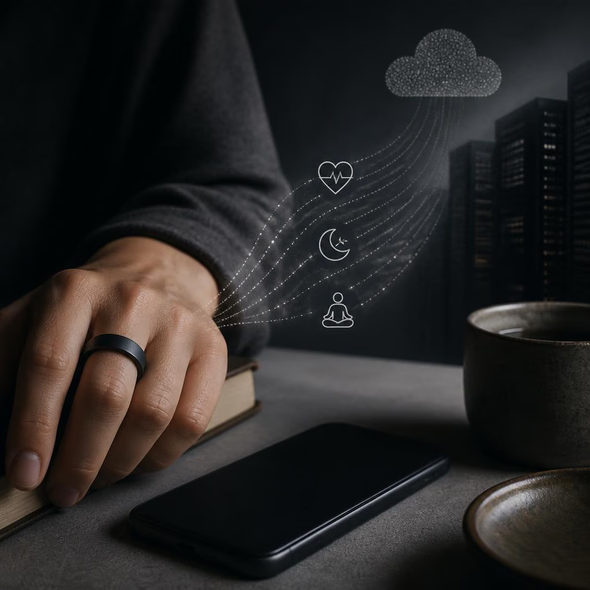
The unobtrusive wearable carries a new status code: the cultivated user still measures everything but no longer appears available to every buzz. That restraint may feel better, yet the calm exterior can conceal an active commercial relationship with the body.
A new class of health wearables from companies including Garmin, Google Fitbit, Polar, Amazfit, and Whoop promises to measure sleep, movement, heart rate, and recovery without placing another bright little screen on the wrist. These devices are designed to be ignored for much of the day. The sensors continue working while the phone stays in a pocket or lies face down.
The relief is not imaginary. A smartwatch can turn the body into a minor office, buzzing with messages, movement reminders, morning reports, and scores demanding inspection. Removing the display can interrupt the reflexive wrist raise and let useful tracking occur without giving every notification a seat at the table.
Minimalism also carries a status code. The conspicuous smartwatch once signaled connection and quantified discipline; the quieter device now suggests a more cultivated command. Its wearer still records the night, the run, and the pulse, but performs the elegant luxury of seeming unbothered. Attention has become scarce enough that not displaying technology can advertise control over it.
The object may be quiet, but the arrangement remains busy. Sensors collect measurements, software turns them into scores, and an app decides which conclusions the wearer can see. Depending on the product, useful interpretation may also sit behind recurring fees. Silence is a design choice, not a data policy.
A buyer should therefore judge more than comfort and discretion. Ask how the device’s readings are assessed, how often it needs charging, which features require a subscription, and whether the app explains its conclusions in terms a person can act on. A serene ring or strap is not especially useful if its most important judgment is an unexplained number delivered by a company dashboard.
The cleanest test comes before purchase: What data can you export, understand, and retain if the subscription ends? Check whether the history leaves the branded app in a usable format and what functions remain without payment. A wearable earns the right to disappear into daily life only when the wearer can leave its platform without making years of bodily records disappear too.
Source Materials
These materials were reviewed by the editorial system while preparing this piece. Muerte.casa may interpret, satirize, reframe, or disagree with them.
- Why the Hottest New Wearables Want to Be Ignored Wired · August 30, 2026 · Primary signal · Direct source
How did this story land?
This may be changed as you like.