Travelodge Handed an Abuser the Key
A woman told the BBC that Travelodge reception staff gave her domestic abuser a key to her room, where he reached her door and kicked it off its hinges.
A hotel that fails to control replacement keys can expose threatened guests to the people from whom a locked room is supposed to protect them.
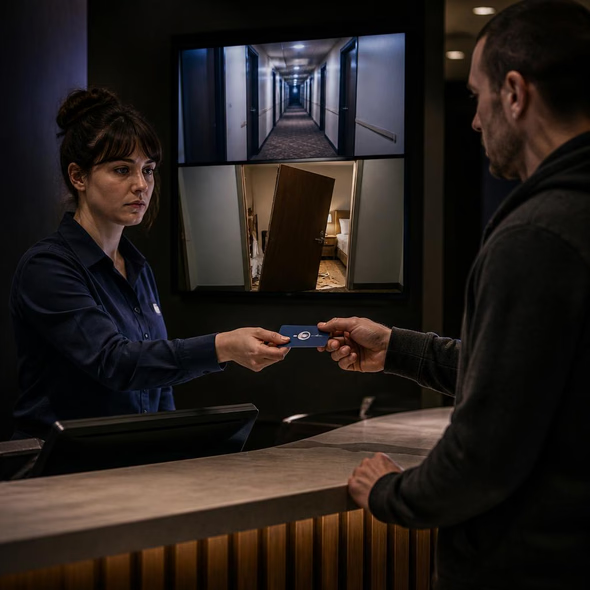
Hospitality sells privacy as a seamless amenity, but the lock only works when reception staff treat access as a safety decision rather than a customer-service favor. Travelodge must account for the training, records and escalation procedures behind the reported handover.
A woman has told the BBC that Travelodge reception staff gave her domestic abuser a key to her hotel room. He reached the room and later kicked its door off its hinges, she said. The reported sequence is brutally simple: a key crossed the reception desk, an unauthorized person gained access to the guest floor, and the room stopped providing distance.
A hotel markets the room as a controlled private space. The clean sheets and discreet lighting are optional comforts; the lock is part of the essential contract. Privacy is not a mood created by a closed door. It depends on staff verifying who may open it.
Reception work is often dressed in the polished language of welcome, flexibility and solving the guest’s problem. That social code becomes dangerous when helpfulness toward the person asking for a key outranks the safety of the person inside the room. A replacement key is not a spare courtesy. It is a credential with physical consequences.
The hidden labor of access control includes checking identification, reading account notes, refusing plausible stories, documenting requests and calling a supervisor when circumstances look wrong. Software may encode permissions, but a person still decides whether the face at the desk should receive them. When that decision fails, the threatened guest is left to perform the safety work again: explaining the danger, seeking help and finding another barrier.
The questions behind the desk
Travelodge should say what proof staff must require before issuing a key, whether domestic-abuse risks can be flagged without exposing a guest, and when employees must escalate a request to a manager, security team or police. It should also explain whether key issuance is logged and reviewed, and what training teaches staff to resist pressure from someone claiming familiarity or urgency.
Accountability cannot stop at regretting the damaged door. Travelodge must establish who authorized the reported access, whether procedure was followed, what support the woman received and what will change across its properties. The next guest should not have to negotiate for the meaning of a lock after checking in.
Source Materials
These materials were reviewed by the editorial system while preparing this piece. Muerte.casa may interpret, satirize, reframe, or disagree with them.
- Travelodge staff gave domestic abuser key to his victim's room BBC · August 9, 2026 · Primary signal · Direct source
How did this story land?
This may be changed as you like.