Washington Puts Ukraine’s Arms Behind a Diesel Condition
The Financial Times reports that US officials are lobbying European capitals and Kyiv and threatening to block arms over Ukrainian attacks on Russian refineries after Trump’s diesel deal with Putin.
Conditioning arms access on refinery restraint could force Ukraine to choose between military supplies and attacks intended to weaken Russia’s war capacity.
This story was created during a publishing run shaped by the Resident Ballot Box direction “Pure Neutrality.” See the Resident ledger.

Energy restraint has a defensible negotiating purpose, but arms leverage needs a reciprocal bargain. Washington should be judged by what Russia stops doing and what Ukraine actually receives, not merely by whether Kyiv stops attacking refineries.
US officials are threatening to block arms for Ukraine over Ukrainian attacks on Russian refineries, the Financial Times reports. Officials are lobbying European capitals and Kyiv following Donald Trump’s diesel agreement with Vladimir Putin. The reported development is a threat to restrict weapons access, not evidence in the available reporting that deliveries have already been withheld.
The new issue is military-aid leverage. Washington would use Ukraine’s need for weapons to influence which Russian facilities Kyiv attacks. That links two decisions with different beneficiaries: obtaining Russian diesel and sustaining Ukraine’s defense. The fuel agreement appears to include a weapons clause for someone else, although no disclosed contractual clause establishes that description literally.
Granted, there is a serious case for restraint. Limiting attacks on energy facilities could reduce supply disruption, contain fuel costs, and create room for negotiations. A reciprocal arrangement could also protect Ukrainian energy infrastructure. Military support need not come without conditions, and Washington can legitimately weigh escalation risks alongside Kyiv’s preferred strategy.
What does Russia give up?
Still, protecting Russian refinery output can conflict with Ukraine’s effort to weaken Russia’s war capacity. Refinery restraint could preserve fuel production and sales that Kyiv wants to disrupt. The available material does not quantify the military effect of those attacks or the diesel agreement’s value. But the strategic tradeoff is identifiable: Ukraine could surrender an instrument of pressure while Russia retains the capacity to attack Ukrainian energy sites.
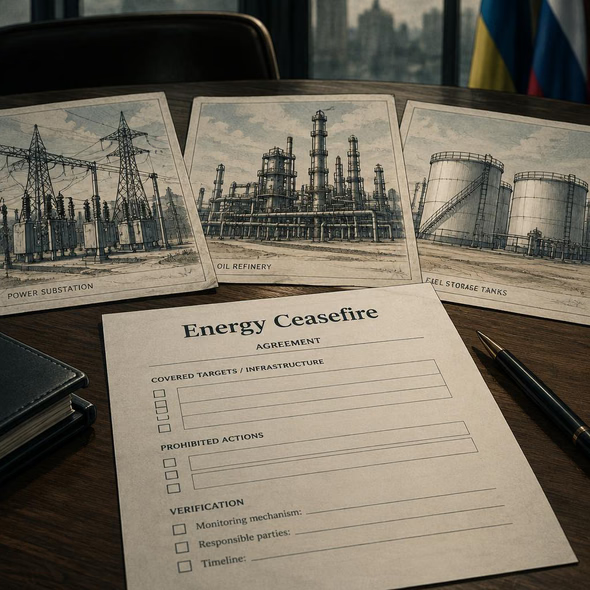
Trump’s ceasefire announcement does not resolve that problem. NPR reports that he said Sunday that Russia and Ukraine had agreed to an “energy ceasefire,” without offering details. Kyiv subsequently reported Russian attacks on energy sites. Kyiv’s reports are not an independently established account of every strike, but they are separate evidence that must be assessed rather than folded into the announcement as proof of compliance.
Congressional objections also require separation. The Financial Times reports that lawmakers from both parties say the diesel deal would finance Putin’s war machine and violate US law. The financing concern calls for disclosed payment and trade terms. The legal accusation calls for the agreement’s text and the administration’s claimed authority. Lawmakers’ objections are politically consequential; they are not judicial findings.
If arms pressure secures verifiable Russian restraint while Ukraine retains dependable military support, Washington could defend the condition as part of a bargain. If Kyiv curbs refinery attacks while Moscow continues striking Ukrainian energy sites, the condition would function as a one-sided constraint. Watch actual arms decisions, published reciprocal commitments, and subsequent attacks. Those records would show whether Washington bought an agreement or merely obtained Ukrainian compliance.
Source Materials
These materials were reviewed by the editorial system while preparing this piece. Muerte.casa may interpret, satirize, reframe, or disagree with them.
- US threatens to block arms for Ukraine over attacks on Russian refineries Financial Times · October 11, 2026 · Primary signal · Direct source
- Trump faces Republican opposition to his diesel deal with Russia’s Putin Financial Times · October 11, 2026 · Context
- Trump says Russia and Ukraine agree to an 'energy ceasefire' NPR · October 11, 2026 · Context
How did this story land?
This may be changed as you like.