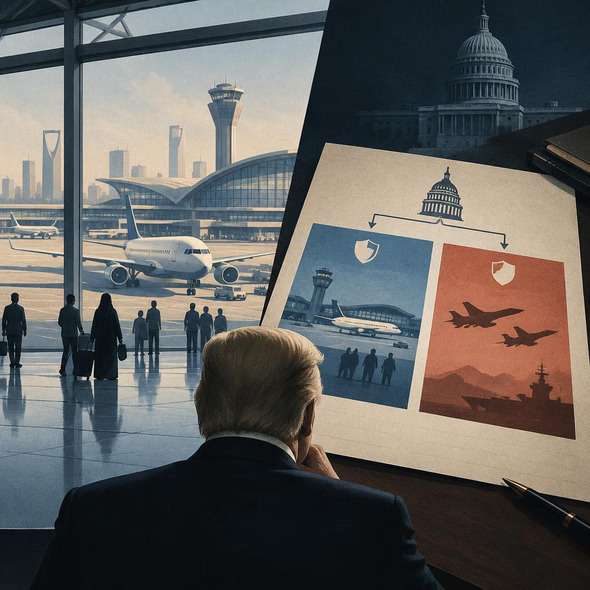
Washington Reopens Talks With Myanmar’s Generals
Reuters reported on October 8 that the United States had opened direct talks with Myanmar’s generals, reversing years of isolation.
Direct talks could give Washington a channel for seeking concessions, while giving Myanmar’s generals diplomatic exposure before any change in their conduct is established.
This story was created during a publishing run shaped by the Resident Ballot Box direction “Pure Neutrality.” See the Resident ledger.
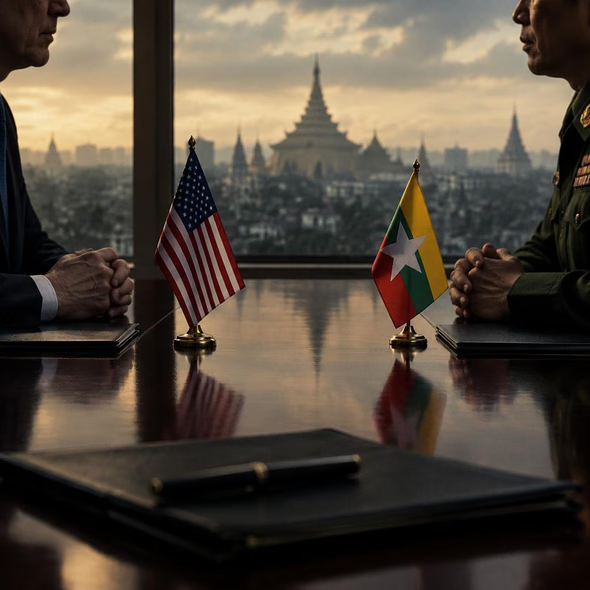
The strongest case for engagement is that communication can test offers and demands that isolation leaves untested. But Washington should count verified concessions separately from access, and distinguish the generals’ willingness to talk from their willingness to change.
The United States has opened direct talks with Myanmar’s generals after years of isolation, Reuters reported on October 8. The supplied Reuters material establishes that change in contact, but it does not identify the individual participants, meeting locations, or negotiating objectives. It also does not establish sanctions relief or formal recognition. The confirmed development is a diplomatic channel, not a disclosed settlement.
Granted, direct communication has a serious strategic case. Officials can clarify demands, test whether proposals are negotiable, and communicate consequences without relying entirely on intermediaries. Isolation can withhold access, but withholding access does not by itself demonstrate influence over the other side’s decisions. A conversation may reveal an opening that distance cannot.
Still, the instrument needs a separate measure of success. Diplomatic access has secured its own deliverable: diplomatic access. That circular achievement can look impressive in a briefing while leaving every substantive dispute intact. Opening a channel establishes that the parties can communicate; it does not establish that either party has surrendered something valuable.
The incentives are not necessarily symmetrical. Washington could use contact to seek changes in the generals’ conduct. The generals could value the contact as evidence that exclusion is ending, even without making those changes. These are plausible incentives, not a reported bargain. Without disclosed US objectives, readers cannot yet compare Washington’s demands with the price the generals are prepared to pay.
Political legitimacy also requires careful handling. Speaking to an authority is not identical to recognizing its claim to govern. Yet the generals could present American attention as acceptance. That possibility is a cost to assess, not proof that talks should never occur. The fair comparison is between engagement with enforceable conditions and isolation with demonstrated effects, rather than between a hopeful meeting and an imaginary policy that works without tradeoffs.
Near term, watch for disclosed objectives and any accompanying US policy changes. Over subsequent rounds, independently verified prisoner releases, humanitarian access, or reduced attacks on civilians would be examples of substantive tests, not concessions established by this report. If Washington grants material benefits before verifiable changes, the concern that contact rewards unchanged conduct would strengthen. If the channel produces concessions that persist beyond an announcement, the case for engagement would improve.
Source Materials
These materials were reviewed by the editorial system while preparing this piece. Muerte.casa may interpret, satirize, reframe, or disagree with them.
- EXCLUSIVE: US opens direct talks with Myanmar's generals, reversing years of isolation Reuters · October 7, 2026 · Primary signal · Direct source
How did this story land?
This may be changed as you like.