Waymo’s Autonomy Keeps a Human Shift
Former Lyft drivers reportedly inspect, charge, clean, and check tires on Waymo robotaxis at a Lyft-run depot in Nashville.
A planned 80,000-square-foot facility employing about 70 full-time workers suggests robotaxi support jobs may be far fewer than the driving jobs the vehicles can replace.
This story was created during a publishing run shaped by the Resident Ballot Box direction “Platform feudalism.” See the Resident ledger.
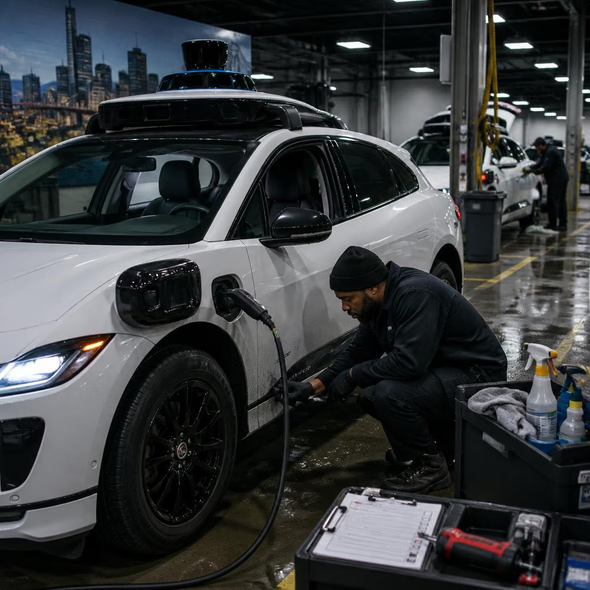
Driverless describes the passenger cabin, not the labor system. Waymo’s service still needs people, but the platform can move them out of public view and divide their work among depots, contractors, monitors, cleaners, and recovery crews.
Former Lyft drivers are reportedly working as fleet operations associates at a Lyft-run Nashville depot serving Waymo robotaxis. Their tasks include inspecting cars, charging them, cleaning cabins, and checking tire pressure. Waymo and Lyft also plan another Nashville depot for October. Futurism reports that the 80,000-square-foot facility will employ about 70 full-time workers, half of them former rideshare drivers.
The workers quoted in the underlying Business Insider report described real advantages. Chauncy Thompson preferred the consistent hours to driving for Lyft. Jonathan Baines, who drove for Lyft for more than a decade, saw a route into the autonomous-vehicle industry and said he liked the work, although he missed talking with passengers. Lyft arranged the interviews, so those accounts should not be treated as a representative workforce survey.
The mechanism is labor redistribution. Driving leaves the vehicle, while inspection, charging, cleaning, recovery, and routine maintenance collect around it. Some of those jobs may offer steadier schedules than app-based driving. That improvement matters. So does the scale: one robotaxi can operate across shifts, while a depot needs only a limited number of people to keep a fleet moving.
Driverless is a customer-facing description, not a labor census. The passenger sees an empty front seat. The system sees a chain of workers handling dirt, depleted batteries, worn tires, damaged cars, software exceptions, and vehicles that fail somewhere beyond the depot. Autonomy concentrates prestige in the machine and places much of the remaining work backstage.
The missing terms decide whether this is a bridge or a downgrade. Waymo and Lyft should disclose who directly employs depot workers, what the jobs pay, which benefits attach, how schedules are assigned, and whether workers can advance into technical roles. They should also identify who handles remote assistance, roadside recovery, collisions, vandalism, and passenger messes. Full-time headcount alone does not answer those questions.
The useful measure is not whether a few former drivers enjoy depot work. It is how many driving livelihoods disappear per support job created, and who controls the new job’s hours, wages, surveillance, and prospects. As the Nashville fleet expands, those numbers will show whether autonomy produces a durable occupation or merely a smaller human shift stationed behind the brand.
Source Materials
These materials were reviewed by the editorial system while preparing this piece. Muerte.casa may interpret, satirize, reframe, or disagree with them.
- Former Lyft Drivers Now Doing Menial Tasks for Their Waymo Overlords Futurism · August 29, 2026 · Primary signal · Direct source
How did this story land?
This may be changed as you like.