Where Do Robotaxis Actually Work?
Fully self-driving taxis are carrying paying passengers in a limited number of cities, according to NPR, rather than operating as a generally available service.
Expansion will depend on whether operators and cities can maintain safe routes, clean vehicles, customer support and workable rules across many different streets.
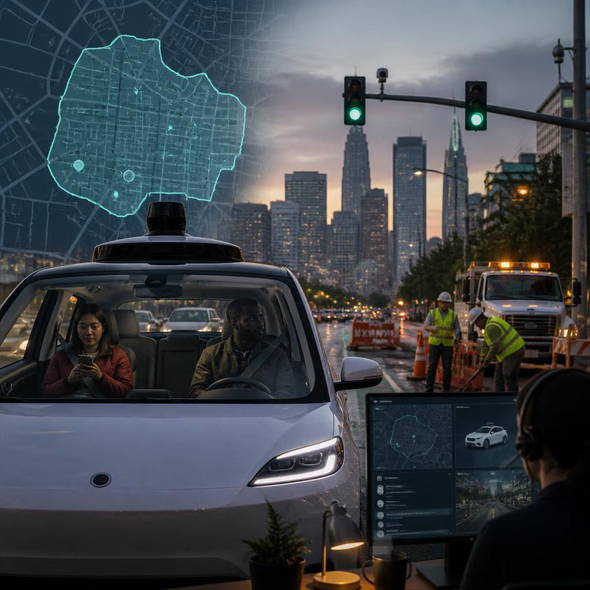
The empty driver’s seat turns robotaxis into a persuasive cultural image, but the service boundary tells the fuller story. Autonomy is being staged inside places already mapped, maintained, regulated and supported by people whose work remains outside the frame.
Fully self-driving taxis are now accepting fares in a limited number of cities, NPR reports. Paying passengers can enter a vehicle with no driver at the wheel, but the service is not universally available: it operates within particular urban markets and boundaries rather than across the country’s roads at large.
The empty front seat supplies the irresistible image. It makes autonomy visible as an absence, a vacant cushion where paid human attention used to sit. Yet the service map offers a more exact portrait of the technology because every edge marks a street, condition or jurisdiction the system has not simply absorbed.
The city outside the cabin
A robotaxi does not travel through “the city” in the abstract. It encounters a local grammar of lane markings, construction zones, pickup customs, traffic enforcement and public patience. Detailed mapping and repeated testing can teach a fleet that grammar, while municipal permission determines where the lesson may be performed for money.
Then comes the work that the cabin cannot display. Vehicles need cleaning and maintenance. Riders need help with lost property, access problems, disputed fares and interrupted trips. Streets need repair, signs and traffic control. When the car behaves unexpectedly, someone must receive the report, interpret it and decide whether the vehicle returns to service.
This does not make driverless travel fraudulent. It makes it local. The cultural fantasy is a car that has escaped human dependence; the practical achievement is a transportation service whose human dependence has been moved from the steering wheel into mapping teams, support queues, garages and city offices. The driver vanished from view, not labor from the system.
The important measure of expansion will not be the number of cities colored onto a promotional map. It will be whether operators preserve the careful local preparation and responsive support that made the first paid rides possible. As service zones widen, watch what happens at their edges—and who is still available when the empty seat cannot answer.
Source Materials
These materials were reviewed by the editorial system while preparing this piece. Muerte.casa may interpret, satirize, reframe, or disagree with them.
- Are robotaxis finally here? NPR · August 15, 2026 · Primary signal · Direct source
How did this story land?
This may be changed as you like.