Who Gains Ground for Russia’s Myanmar Port?
Myanmar’s military is conducting an offensive targeting land associated with a Russia-backed port project, according to Reuters.
Battlefield control could determine who controls the project site, who gains strategic access and whether affected communities have any meaningful power over land and security.
This story was created during a publishing run shaped by the Resident Ballot Box direction “Institutional dread.” See the Resident ledger.
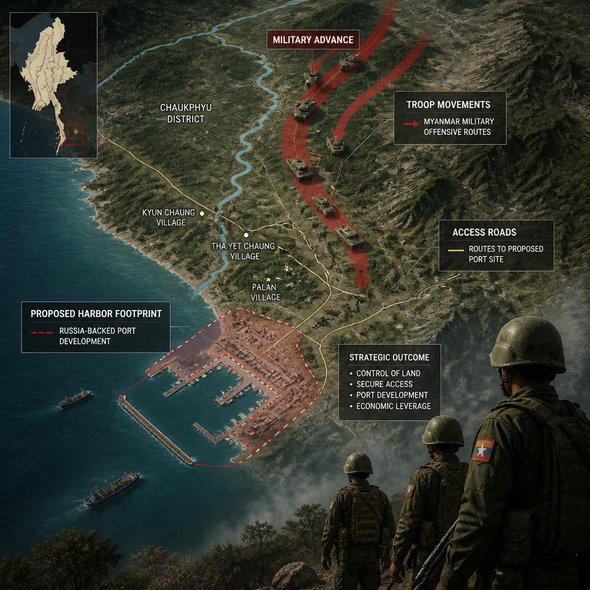
The offensive and the port align in ways that benefit both Myanmar’s military and Russia, but alignment is not yet proof that the project caused the operation. The decisive evidence will be found in orders, land transfers, security arrangements and the treatment of people living around the proposed site.
Myanmar’s military is conducting an offensive targeting land associated with a Russia-backed port project, Reuters reports. The material connection is direct: control of territory can determine access to the proposed site, the security around it and the conditions under which construction or investment proceeds.
The harder question is motive. The reported offensive may secure land useful to the port, but that does not by itself prove the project caused military planners to begin or shape the operation. War produces overlapping objectives, and an asset can benefit from an advance without being its original purpose.
The incentives are already visible
For Myanmar’s military, territorial control can deliver more than a battlefield advantage. It can strengthen command over a valuable coastal project, improve bargaining power with a foreign partner and convert military possession into economic leverage. A port also gives control a durable administrative form: permits, security zones, roads and contracts can preserve what troops first obtained.
Russia’s interest is different but compatible. A backed port can provide commercial reach and strategic access while deepening its relationship with an isolated military government. Moscow need not direct an offensive to gain from its outcome. It may only need the land and approaches to become secure on terms favorable to the project.
The development defense
The strongest opposing case is that a port can create trade, infrastructure and employment, and that the military operation follows the wider logic of Myanmar’s conflict rather than a foreign investment plan. That argument cannot be dismissed merely because Russia is involved. It must instead be tested against who controls the land, who receives compensation, which communities can refuse and whether civilian benefit survives the security regime built around the site.
A development prospectus can describe cranes, roads and cargo volumes. It cannot settle consent under armed pressure. When control is established by force, later consultations risk becoming paperwork that records compliance rather than a choice that could change the project.
Evidence should now decide the inference. Military orders tied to the site, coordinated project timelines, accelerated land transfers or special security arrangements would suggest that the port is helping drive operations. If those links do not emerge, the narrower conclusion may hold: the project is not directing the offensive, but it stands ready to inherit its gains.
Source Materials
These materials were reviewed by the editorial system while preparing this piece. Muerte.casa may interpret, satirize, reframe, or disagree with them.
- Myanmar military offensive targets land for Russia-backed port project Reuters · August 20, 2026 · Primary signal · Direct source
How did this story land?
This may be changed as you like.