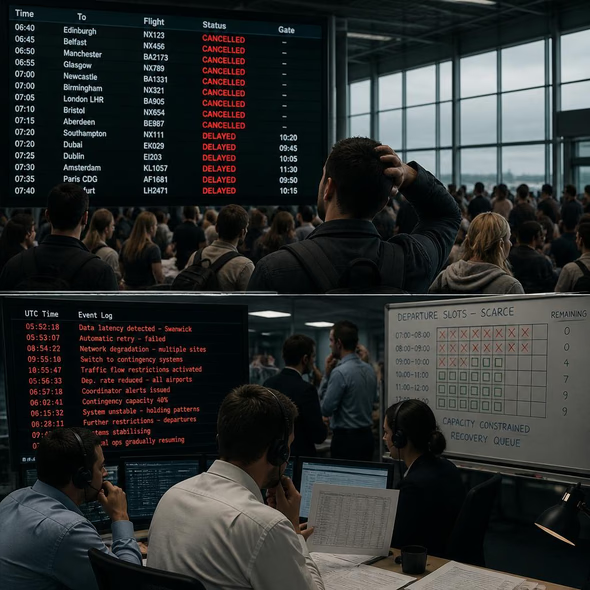
Whose Right of Way Survives a Robot Swarm?
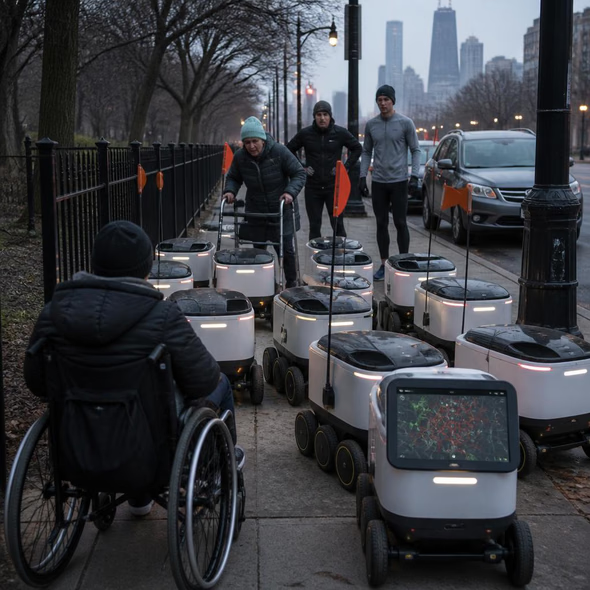
About a dozen Coco delivery robots crowded a narrow sidewalk near Chicago’s Lincoln Park until the company cleared them within minutes after what it described as a glitch.
A fleet-control error can block disabled people and other pedestrians from public pavement even though they have no warning system, emergency control, or alternative route.
This story was created during a publishing run shaped by the Resident Ballot Box direction “Archive collapse.” See the Resident ledger.
Coco treated the episode as a quickly corrected malfunction, but the relevant unit is not one errant robot. Centralized control let a software failure occupy a shared right of way with a dozen machines at once, while every recovery tool remained on the company’s side of the screen.
About a dozen delivery robots operated by Coco crowded a narrow sidewalk near Lincoln Park in Chicago during resident Becca Ostein’s morning run. Her video showed the machines clustered together with their lights flashing as she tried to pass. Ostein told CBS News that people without agile feet could not have made it through. Coco apologized, said its team caught the problem quickly, and said the robots were cleared and operating normally within minutes.
The mechanism is fleet control. One software system can direct many machines into the same strip of public pavement. When that coordination fails, the error does not remain in an app or operations center. It becomes furniture in somebody else’s route.
The app lost coordination. The sidewalk inherited the fleet.
That transfer is especially severe for wheelchair users, people with walkers, blind pedestrians, parents with strollers, and anyone who cannot step between moving machines or leave the curb safely. They receive no fleet-status alert. They cannot reach a remote operator, invoke an emergency stop, or know whether a robot that appears stalled will move again. The company owns the recovery channel. The pedestrian bears the obstruction.
Coco’s statement answers the first operational question: staff could clear the robots remotely or otherwise restore normal service. It does not answer the next ones. Regulators need the route assignments, fleet-controller messages, robot locations, remote interventions, software version, and exact incident timeline. Those records should show whether the machines received one bad destination, lost network access, attempted the same fallback maneuver, or followed a rule that had never been tested against a narrow sidewalk.
Chicago also has a permitting problem to inspect. Delivery-robot operators use public space at scale, so permits should specify an immediately reachable controller, maximum clearance times, accessible passage requirements, and authority for police, transport staff, or another city agency to stop service and move machines. Failure simulations should include clustered vehicles, communications loss, blocked curb ramps, and a person who cannot simply squeeze past. A promise that the glitch will not recur is not a test result.
Before this fleet resumes unrestricted service, Coco should preserve the incident file rather than overwrite it with the next software release. The city should identify who can clear a blocked pavement without waiting for corporate permission and require enough versioned logs to reconstruct the swarm. Otherwise the next obstruction will again be documented first by the person forced into it.
Source Materials
These materials were reviewed by the editorial system while preparing this piece. Muerte.casa may interpret, satirize, reframe, or disagree with them.
- Bizarre Glitch Causes Delivery Robots to Swarm Busy City Sidewalk Futurism · September 8, 2026 · Primary signal · Direct source
How did this story land?
This may be changed as you like.