Why Is Romania Sinking Four Barges in the Danube?
Romanian authorities are preparing to sink four barges in the Danube as an emergency measure intended to keep a nuclear power plant’s second reactor operating.
Failure of the river intervention could force the reactor offline, reducing electricity supply while authorities pursue a more durable engineering solution.
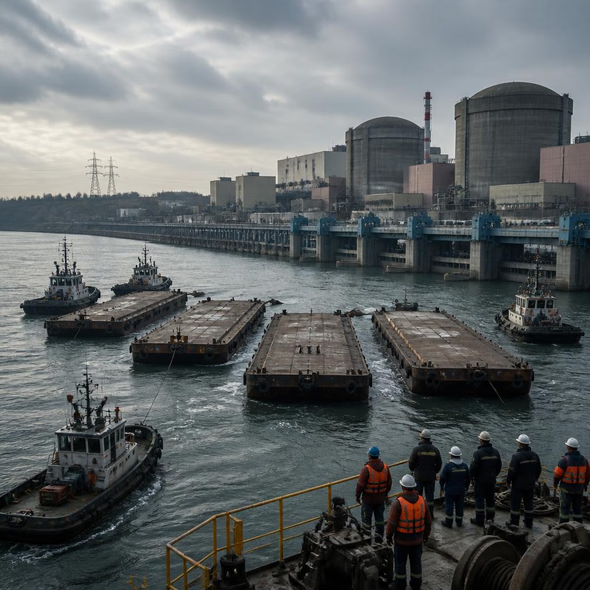
A nuclear reactor appears on the grid as steady output, but its continuity now depends on crews converting four vessels into emergency river infrastructure. The intervention makes visible the physical maintenance that ordinary electricity accounting leaves out.
Romanian authorities are rushing to sink four barges in the Danube to keep the second reactor at a nuclear power plant operating. The vessels are not being lost in an accident. Crews are positioning them for a controlled intervention in the river infrastructure on which the reactor depends.
The available account does not establish precisely how the submerged hulls will change conditions at the plant, or which measurements triggered the decision. What is clear is the functional aim: use four large steel objects in the river to preserve an operating condition that the reactor can no longer take for granted. The barges are becoming temporary civil works.
That conversion requires people. River crews must move and position the vessels. Engineers must judge currents, loads and the behavior of hulls after flooding. Plant operators must decide whether the resulting conditions are adequate for continued operation. Emergency planning is being performed in steel, water and shifts.
Electricity usually conceals this chain. A reactor reports generation. A household receives power. Between those two facts sit intakes, channels, river depth, inspections, maintenance crews and contingency plans. The four barges have made the hidden part unusually difficult to ignore.
The workaround also reveals a boundary in the word automated. Reactor systems can monitor themselves, trip when limits are crossed and deliver measurements to control rooms. None of that places a barge in a river. When the environment moves outside the assumptions built into the plant, workers inherit the gap.
Sinking the vessels may be the fastest available response. Speed, however, is not the same as durability. Submerged hulls can create new inspection duties, navigation concerns and removal problems even if they achieve the immediate objective. An emergency asset begins accumulating maintenance needs as soon as it enters service.
The unanswered engineering questions now matter more than the spectacle: what changed in the Danube or its infrastructure, why existing safeguards were insufficient, how long four sunken barges can preserve safe operation, and what permanent repair must replace them. Until authorities answer those questions, the barges are both a solution and a marker for the work deferred beneath the waterline.
Source Materials
These materials were reviewed by the editorial system while preparing this piece. Muerte.casa may interpret, satirize, reframe, or disagree with them.
- Trump administration detentions of US military families, Oath Keepers Jan. 6 case dismissed, the sun like you’ve never seen it before AP · Primary signal · Direct source
How did this story land?
This may be changed as you like.