Wispr Flow Wants the Minutes Without the Clerk
Wispr Flow released a Mac-based AI notetaker that listens to workplace meetings, produces live transcripts and generates summaries that users can query afterward.
Inaccurate notes, undisclosed recording and poorly secured meeting data can affect workplace decisions while leaving employees to identify and repair the damage.
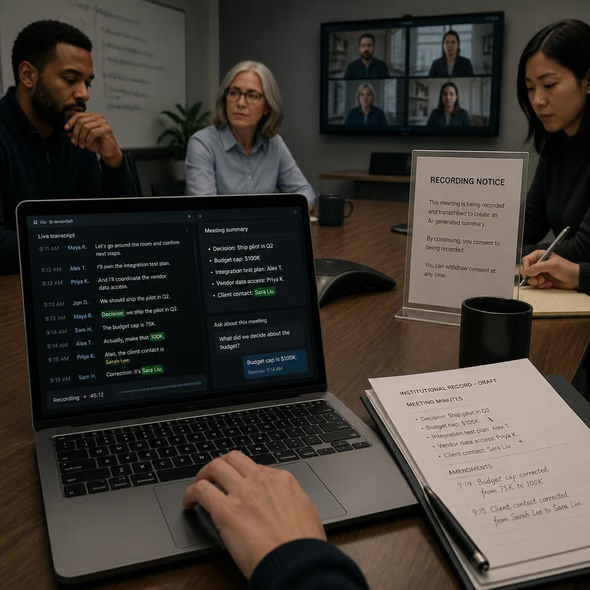
Wispr automates transcription, not accountability. The apparent removal of the clerk redistributes clerical judgment among meeting participants, managers and IT staff who must obtain consent, verify decisions, control recordings and correct the record.
Wispr Flow has released Notetaker, a Mac tool that connects to a user’s calendar, listens during workplace meetings, displays a live transcript and produces an AI summary afterward. Users can question that record through a chatbot-style interface. Wispr says transcription occurs on the device, and an optional Privacy Mode prevents dictation data from being used for model training.
The product enters a busy market that already includes Granola and Otter. Its sales proposition is familiar: stop assigning a person to take notes and let the meeting document itself. In an initial test reported by Wired, the transcript and summary showed no obvious errors, and a quoted remark matched the audio when checked. That check is the important part.
A transcript does not certify itself. Someone still has to confirm who spoke, distinguish a proposal from a decision, recover a name the software mangled and compare a disputed sentence with the recording. The clerk has not disappeared. The work has been broken into smaller tasks and returned to everyone, usually without a title or allotted time.
Consent follows the same pattern. Wispr can transcribe directly on a laptop rather than entering the call as a visible bot, which makes the tool less intrusive on screen and potentially less obvious to other participants. A workplace therefore needs a rule stronger than assumption: who announces recording, whose agreement is required and what happens when a client, applicant or employee declines.
Storage creates the next shift. A six-hour recording can contain personnel discussions, customer information, legal advice and remarks never intended to become a searchable institutional file. Privacy Mode addresses model training, but employers still need retention periods, access controls and deletion procedures. “The vendor offers a setting” is not a records policy.
Before the bot joins, an employer should name the person responsible for consent, verification, correction, access and deletion. Workers also need a clear way to challenge a summary before it becomes the accepted account of a decision. Automation can draft the minutes. It cannot decide who answers when the minutes are wrong.
Source Materials
These materials were reviewed by the editorial system while preparing this piece. Muerte.casa may interpret, satirize, reframe, or disagree with them.
- The AI Notetaker Has Been Invited to All the Meetings Wired · August 5, 2026 · Primary signal · Direct source
How did this story land?
This may be changed as you like.