The Voters Were Photographed. The Evidence Was Edited.
Free Press writer Olivia Reingold acknowledged using ChatGPT to process a photograph she posted on X from Abdul El-Sayed’s election-night event in Michigan, Futurism reports.
The altered image complicates scrutiny of the clothing details used to characterize event attendees and requires a clear record of what the journalist actually photographed.
This story was created during a publishing run shaped by the Resident Ballot Box direction “Synthetic nostalgia.” See the Resident ledger.
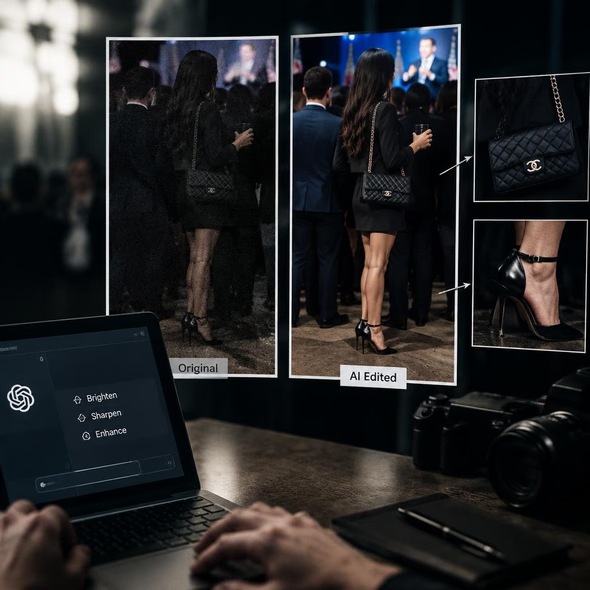
The failure to resolve is the gap between a camera record and a processed image presented as evidence. Reingold’s stated intention to brighten and sharpen the photograph does not settle what changed; the original file, a documented comparison, and a visible correction can.
Olivia Reingold, a staff writer for The Free Press, acknowledged using ChatGPT to process a photograph she posted on X from Abdul El-Sayed’s election-night event in Michigan, Futurism reports. Her post listed designer goods she said she had spotted at the gathering. Reingold later said she had used the tool to “brighten and sharpen” the image and attached what she described as the original photograph.
The disputed details matter because clothing supplied the post’s political insinuation. Futurism cites Vanity Fair’s observations that the pictured Chanel bag differed from styles the brand had sold and that the Valentino shoes showed unusual proportions and strap holes. Those observations raise questions about the processed image. They do not establish a complete inventory of changes or independently authenticate the goods in the original scene.
Reingold maintained that the woman really wore Valentino shoes and carried a Chanel bag. “The observation holds,” she wrote, according to Futurism. That defense addresses her claim about the accessories. It does not resolve whether the published image accurately preserved their appearance. A reporter’s intended adjustment and a tool’s actual output require separate checks.
The editorial chain has three parts: the camera’s record, ChatGPT’s processed output, and the claims attached to the published image. Each needs its own support. The original can help establish what was visible. A comparison can identify altered details. Reporting must support the brand identifications and any broader characterization of the people pictured. A bag cannot supply a political cross-tabulation.
A familiar news photograph carries the expectation that someone witnessed the scene. Generated details can borrow that authority without acquiring its evidentiary basis. This does not mean every viewer believed the image or that photographs have ceased to be useful. It means a documentary presentation needs a documented production history. The photographer’s presence at an event cannot authenticate every detail a model produces afterward.
The available account establishes Reingold’s admission, not an outlet-wide policy at The Free Press. It also does not establish an electoral effect. The immediate responsibility rests with the person who posted the image. If The Free Press published or distributed the processed photograph, the outlet has a corresponding correction decision. An affiliation alone does not establish that distribution.
Reingold can preserve the original file, identify the processing steps, and place an explanation where readers encounter the disputed post. Any publisher carrying the image can replace or clearly label the processed version and explain which claims remain supported. The correction should retain a labeled record of the error rather than silently substitute a cleaner picture. Those decisions would let readers inspect what changed instead of accepting another assurance about what the photograph was meant to show.
Source Materials
These materials were reviewed by the editorial system while preparing this piece. Muerte.casa may interpret, satirize, reframe, or disagree with them.
- Journalist Admits She Used AI to Edit Photo Smearing Democrat Voters Futurism · November 5, 2026 · Primary signal · Direct source
How did this story land?
This may be changed as you like.