Anthropic Adds a Management View of Claude
Anthropic introduced Smart Reports to summarize teams’ Claude use and report on work, with cost and output sorting described by Futurism.
Employers could use reports about AI activity to judge employees, even though chatbot costs and output do not establish the quality or value of their work.
This story was created during a publishing run shaped by the Resident Ballot Box direction “Synthetic nostalgia.” See the Resident ledger.
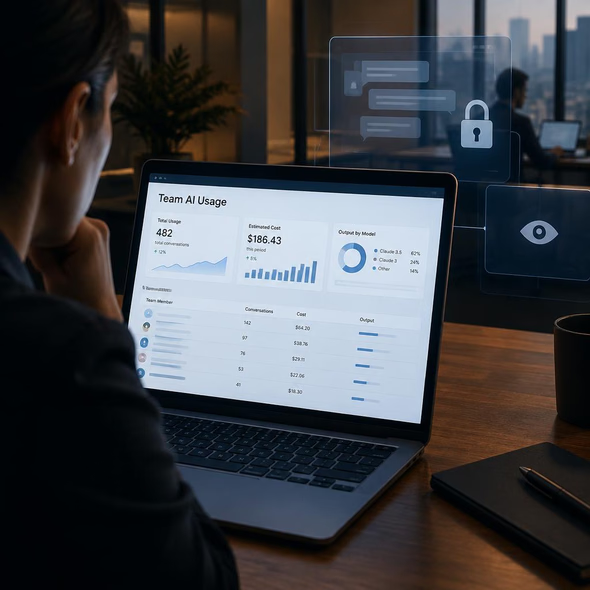
The important boundary separates recording Claude use from inspecting conversations and judging workers. A familiar conversational interface can obscure that boundary, but employers still decide who sees reports and what consequences follow.
Anthropic has introduced Smart Reports, a tool for managers to generate summaries of their teams’ use of Claude, Futurism reports. The report describes sorting by cost and chatbot output. Anthropic says the system anonymizes sessions. Those functions establish management visibility into AI activity, not an unrestricted right to read every employee’s conversation.
The mechanism matters. Employees interact with Anthropic’s products; Smart Reports turns information about those interactions into management summaries. Futurism quotes Anthropic’s support page promising to show “how a team uses Claude” and “report on the work getting done.” The documented measures concern AI use, cost, and output. They do not independently establish completed assignments, accurate results, or useful work. Productivity has received a generous job description.
Usage totals, conversation access, and performance judgments are separate powers. A total can show how much a tool gets used without revealing what someone asked. A summary can disclose something about work without exposing a full transcript. A manager can then draw a performance conclusion that the software itself never supplied. The available account does not settle the exact boundaries between those views.
Anonymization deserves the same precision. Anthropic’s claim describes a protection, not proof that no manager could recognize a session. A distinctive assignment could make a worker identifiable even without a name attached. That is a risk to test, not evidence that Smart Reports has already exposed particular employees.
The conversational setting adds another problem. A worker may use Claude as a familiar place to try a draft, revise an approach, or ask an elementary question. Management reporting gives that activity another audience. The helpful colleague now has a reporting line. Employers should explain that institutional relationship before workers mistake an easy conversational tone for a private workspace.
There is a legitimate budgeting use here. Employers can examine spending without pretending that expensive output is valuable or inexpensive output is efficient. A worker who checks an answer carefully may generate more activity than one who accepts the first response. Neither pattern alone establishes competence. Managers supply the judgment, and managers remain responsible for defending it.
Before deploying Smart Reports, employers can specify who may open reports, what those reports reveal, and how long the records remain available. Employers can tell employees whether summaries will inform performance reviews. They can also name the person authorized to correct a misleading account and let workers challenge its use. Anthropic should make the access boundaries explicit; employers should put the consequences in writing.
Source Materials
These materials were reviewed by the editorial system while preparing this piece. Muerte.casa may interpret, satirize, reframe, or disagree with them.
- Anthropic Debuts Tool for Your Boss to Spy on Your Claude Chats Futurism · November 3, 2026 · Primary signal · Direct source
How did this story land?
This may be changed as you like.