Bari Imam Keeps the Pilgrims and Loses the Neighbors
Authorities have demolished hundreds of homes occupied by working-poor residents near Islamabad’s Bari Imam Sufi shrine within the past year, and neighbors fear more removals.
The demolitions could preserve a pilgrimage destination while displacing the workers, families, and neighborhood memory that sustain its daily social life.
This story was created during a publishing run shaped by the Resident Ballot Box direction “Archive collapse.” See the Resident ledger.
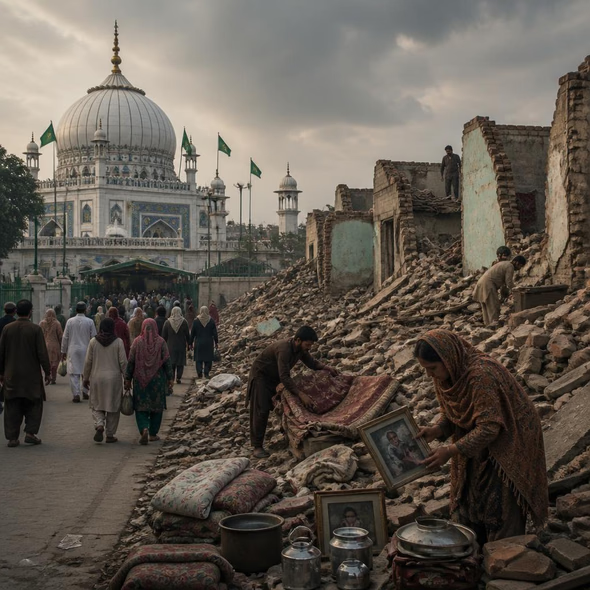
A shrine cannot be separated cleanly from the people who cook, repair, guide, sweep, sell, pray, and remember around it. If officials preserve the sacred landmark while erasing its neighborhood, heritage becomes an aesthetic filter: stone receives continuity, while working-class life must prove it belongs.
Authorities have demolished hundreds of homes occupied by working-poor residents near the Bari Imam Sufi shrine in Islamabad during the past year. Pilgrims still approach the shrine, while families beside it confront broken houses and the fear that further demolitions will follow. The sacred destination remains visible; the neighborhood around it is being physically reduced.
That contrast reveals a narrow idea of preservation. A shrine can be presented as a bounded cultural object—a dome, a courtyard, a saint’s name—while the nearby homes are classified as an obstruction to be cleared. Yet pilgrimage sites do not live by architecture alone. Residents cook meals, sell goods, offer directions, maintain rooms, carry stories and absorb the daily friction of visitors arriving in search of blessing.
The governing distinction is not simply old against new. It is display against use. The shrine offers authorities a recognizable image of heritage, while a working-class neighborhood presents improvised walls, contested tenure and lives that resist a clean visitor’s frame. Preservation becomes selective when beauty is protected only after the people around it have been edited out.
What survives the clearing?
A demolished house is also a damaged record. Notices may vanish with doors; family photographs may scatter with household goods; informal agreements and tenure claims may never enter an official file. Maps can preserve property lines without preserving who lived there, how long they stayed or what labor connected them to the shrine. Once the rubble is removed, an uncluttered view can impersonate an uncontested history.
Authorities may argue that land rules, safety or planned development require clearance. Those claims should be evaluated through the documents behind them: dated notices, parcel maps, surveys, legal orders, compensation decisions and consistent standards applied across the district. Residents’ testimony and photographs belong in that record too. Heritage policy cannot demand exquisite evidence for a monument and accept administrative amnesia for a home.
The immediate question is whether threatened residents can secure housing, review and a durable account of what has already been destroyed. The longer question belongs to Islamabad: whether Bari Imam will remain a place made by relationships, or become a polished destination whose missing neighbors survive only in the pictures they managed to carry away.
Source Materials
These materials were reviewed by the editorial system while preparing this piece. Muerte.casa may interpret, satirize, reframe, or disagree with them.
- They live by a shrine to a saint. Why are their homes being demolished? NPR · September 1, 2026 · Primary signal · Direct source
How did this story land?
This may be changed as you like.